Our vision
Stone walls. Wooden rails. Electric wire. What's next.
Our vision for the farm of the future, from Sarah Adams.
About the author
Sarah Adams is Gallagher's General Manager, Global Strategy & New Ventures, and the person who's led eShepherd from concept to commercial across 14 countries. She farms Rolling Rock at Te Akau in the Waikato with her husband Johnny, an Angus and Poll Dorset stud, plus a commercial sheep and beef operation. Every waterway fenced. Thousands of natives in the ground. 25+ years across agribusiness. Robin Davidson Memorial Award 2024 for her contribution to New Zealand's agritech ecosystem.
This is her view of where eShepherd is going.
I farm.
My husband Johnny and I run Rolling Rock. Same weather you can't control. Same labour you can't find. Same rules that keep tightening. Same margins that keep squeezing.
So when I talk about where eShepherd is going, I'm not pitching from a deck. I'm telling you what we'd want on our own farm.
Every era of farming has been shaped by how we fenced it. Bill Gallagher Senior built the first electric fence in 1938. eShepherd is the line that comes after the wire.
But the next era isn't just about how you fence. It's about how the whole farm thinks.
Not an app. Not a dashboard. An operating system.
Something that senses what's happening on the land and the animals, acts on it, checks the result, and learns. So farmers spend their time on the decisions that matter, not on the busywork in between.
That's the spine of eShepherd. Virtual fencing acts on the herd. Pasture senses the land. Vision Weigh checks the animal. Water keeps eyes on the most critical resource.
One feedback loop. Same animals, same country, same screen. Running every day.
Who to move. Who to sell. Who to mate. Who to cull.
Those calls used to belong to the best stockmen with thirty years of pattern recognition behind them. We can give every farmer that same instinct now, backed by data from every animal, every paddock, every day.
This is where the next quantum lift in productivity comes from. Comparable to what pregnancy scanning did for sheep farmers. The herd stays the herd, but every animal inside it is suddenly visible.
The farm of the future runs on voice and touch.
Farmers shouldn't have to log in, scroll, or fill in forms. They should be able to talk to their farm, from a ute, a horse, or the back of a paddock, and have it talk back.
They should build their own automations, in their own words, that run quietly in the background. Alert me if a heifer goes off-feed. Draft the tail-end of the mob for sale next week. Hold the herd off the riparian zone until October.
Endless automation. On the farmer's terms.
This is what virtual fencing actually unlocks.
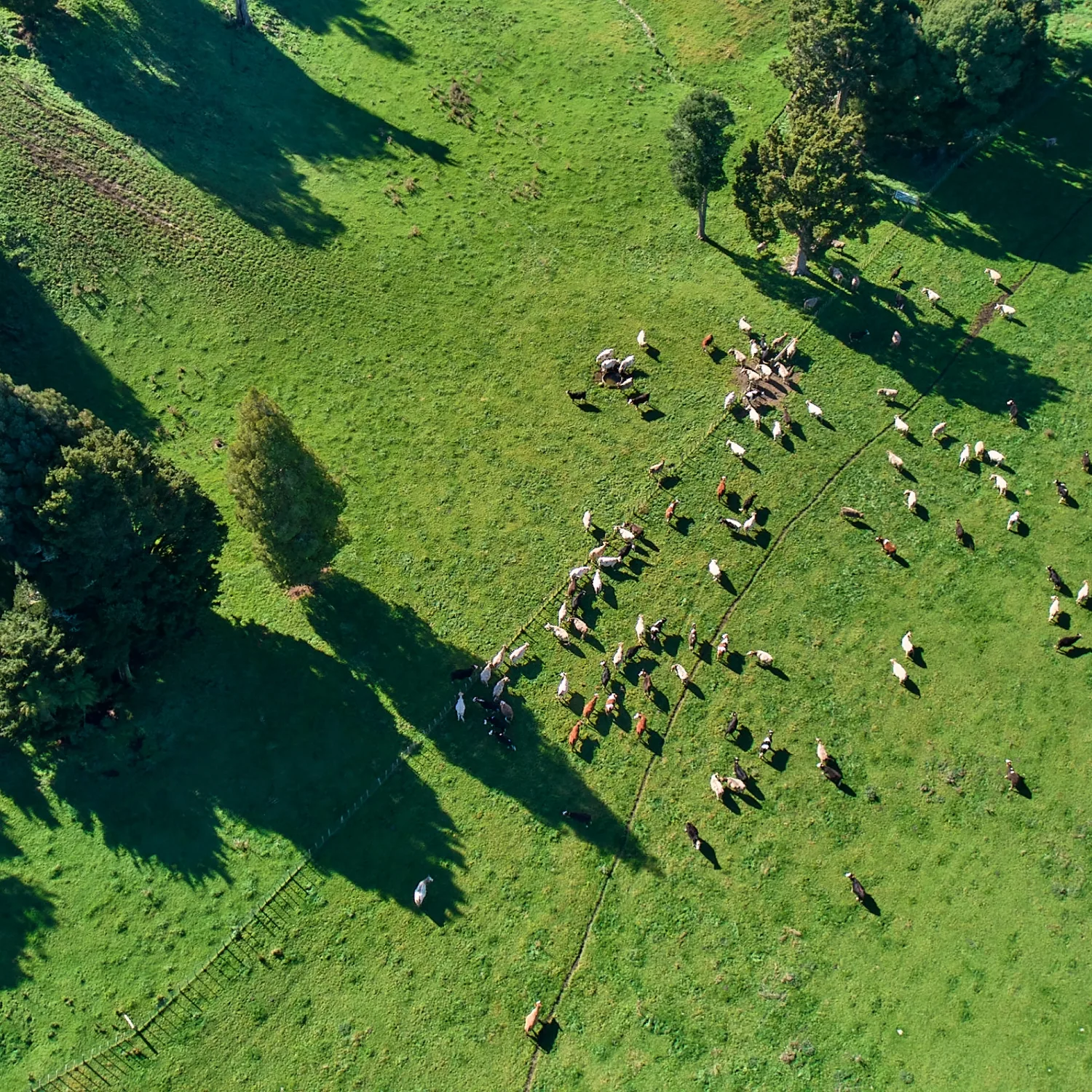
The same rotation discipline a dairy farmer runs on flat irrigated pasture, now possible on a remote hill block where a traditional fence is impossible and a stockman might see the mob once a fortnight.
Tight rotations. Riparian zones excluded automatically. Gully heads given a year off without lifting a post. Grazing pressure that follows the grass, not the fence line.
Beef country worked the same way for a century. Finally able to run a system the dairy industry has had for forty years.
Farmers are under more pressure than ever.
Animal welfare. Climate. Water. Soil. Methane. The list keeps growing, and it isn't going away.
Producing food without losing the public's permission to do so is the real long-term challenge.
eShepherd is built for that pressure. Riparian zones excluded automatically. Erosion-prone country rested without lifting a post. Pasture utilisation lifted, so the same beef comes off less land. Compliance turns into a side-effect of running the farm well, rather than a separate job sitting on top of it.
At Rolling Rock, Johnny and I have fenced every waterway and put thousands of natives in the ground. We did it because it's right. eShepherd makes that work cheaper, faster, and possible on country where traditional fencing was never going to go.
The farm of the future has to earn its place every year. Not as a marketing line. As the price of staying in business.
The days of one company developing everything in-house are over.
The farm of the future is too big a problem for any one team in any one building, and the best ideas rarely come from inside the building anyway.
We invested in Agersens before we acquired it. We backed Farmote. We led the seed round in StrongBó. We partner with Gasbot on water. We mentor through Sprout. Gallagher Next is built to be open to the people working on the other pieces.
Our job is to bring eShepherd's strengths, 88+ years of customer trust, hardware that survives the Australian outback and the Rocky Mountains, distribution into 100+ countries, and connect them with everyone else solving real problems for real farmers.
Open innovation isn't a buzzword. It's how we get the farm of the future built in the time farmers actually have.
eShepherd Virtual Fence is on cattle in 14 countries.
Pasture, Vision Weigh and Water are working alongside it today. The platform is shipping. The webinars are full. The herds are real.
Our job is to keep connecting the pieces. To do it in a way that keeps the farmer, not the platform, not the data, in charge.
For 88+ years we've made tools that worked at the edge of the country.
Now we're bringing the bleeding edge there too.
Swipe to read
In her words
"At Gallagher, we are constantly looking for new ways to improve our products for our customers. Understanding customers has, and will, continue to enable Gallagher to provide innovative solutions to assist them in making better decisions on farm."
Sarah Adams
General Manager, Global Strategy & New Ventures
Te Akau, Waikato
Build it with us