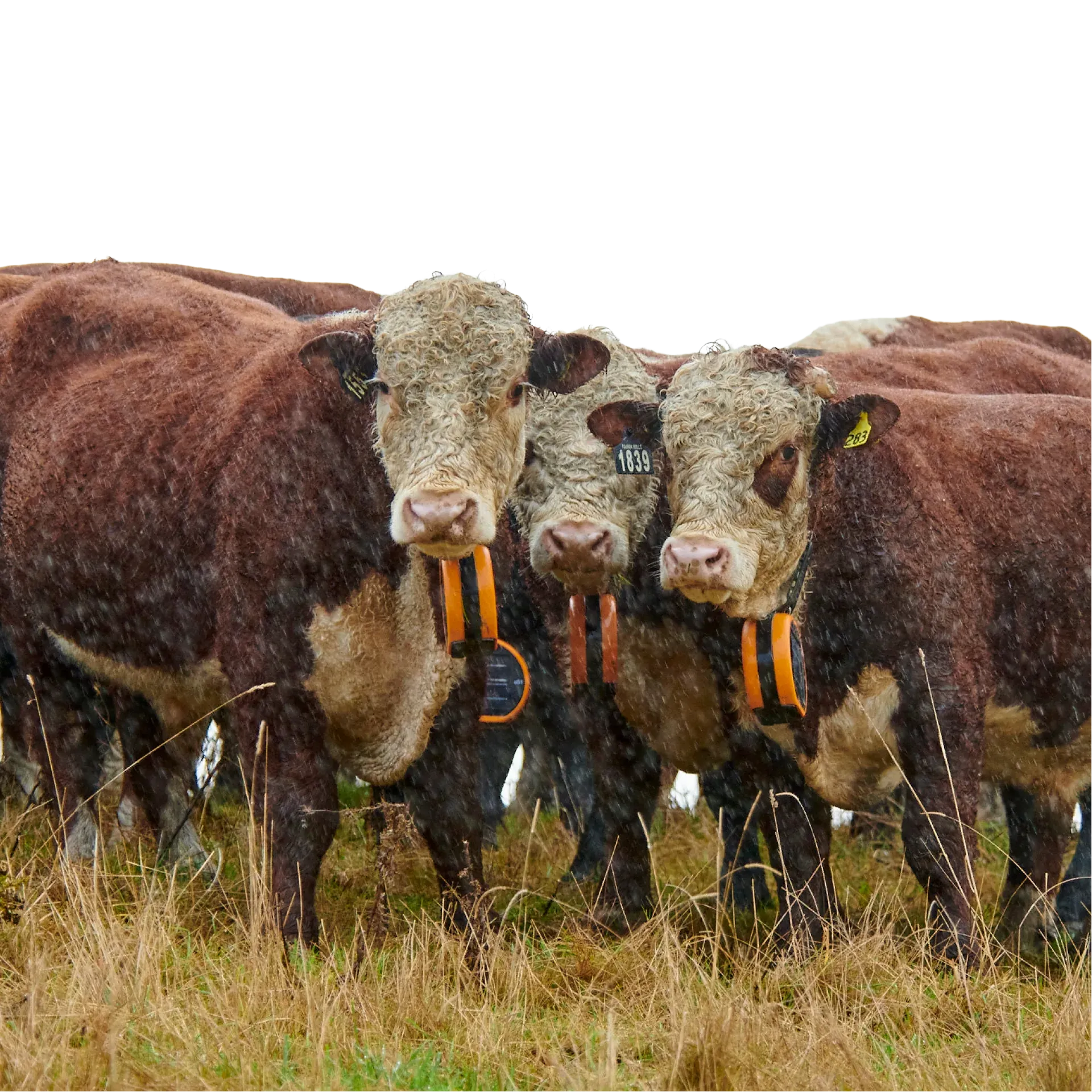
Virtual fencing has gone from research project to working tool on commercial
They all do roughly the same job. GPS-enabled neckbands that train cattle to respect a virtual boundary using audio cues and a brief electrical pulse. But how they're built, priced and supported is very different. This article is the honest version. Where we think eShepherd has the edge, we say so and explain why. Where another system fits better, we say that too.
eShepherd has been deployed across 14+ countries and has been battle-tested across a wide range of climates, herd types and terrain. Beef in the Northern Territory, dairy in Taranaki, big herds in Texas, hill country in South Canterbury, and lifestyle blocks in Victoria. The product has been refined off the back of all of it.
Going deeper If you already know which competitor you're weighing against, jump straight to the head-to-head:
Where each company operates
Country availability matters. Not every system is sold everywhere.
eShepherd: Australia, New Zealand, the United States, Canada and parts of Europe. Plans for South America and the rest of Europe.
Halter: Australia, New Zealand and the United States. The dairy version is only available in New Zealand and Australia, with no current plans to release dairy in the US.
Vence: United States, with select deployments in Australia. Not available in New Zealand or Canada.
Nofence: Most of Europe and the United States, with Canada coming soon. Not available in Australia or New Zealand.
The short version
| eShepherd | Halter | Vence | Nofence | |
|---|---|---|---|---|
| Built by | Gallagher (livestock since 1938) | Halter (NZ startup) | Merck Animal Health | Nofence (Norway) |
| Pricing model | Buy hardware, low monthly fee | Lease, two-year contract | Lease only | Buy hardware, annual subscription |
| Connectivity | Cellular and LoRa base station | LoRa towers, with satellite option | LoRa base station only | Cellular only |
| Battery chemistry | LiFePO4 (no cobalt or nickel) | Lithium-ion | Lithium (single-use) | Lithium-ion |
| Battery life | 7 to 10 years | About 5 years | 2 to 12 months | About 5 years |
| Breaking strength | Slip strap, no fixed break | |||
| Containment | 99% | 98% | 80 to 95% | 99% |
| Min order (NZ/US/CA/UK) | 20 | 50 | None | 5 |
| Min order (AU) | 60 | 50 | n/a | n/a |
| Apps | Mobile and web (full) | Mobile (web view-only since 2025) | Web only (mobile view-only) | Mobile only (no web) |
| Livestock | Cattle | Cattle (beef + dairy) | Cattle | Cattle, sheep, goats |
| Pasture monitoring | Yes (auto-calibrated satellite) | Yes (satellite) | No | No |
| Animal weighing | Yes (Gallagher integration) | No | No | No |
Pricing and total cost of ownership
Every company prices differently, which makes head-to-head comparison hard at first glance.
eShepherd runs a buy-the-hardware, pay-as-you-use model. Neckband pricing is tiered by herd size. The same neckband works on either cellular or LoRa, so the network choice doesn't change the hardware price.
US pricing: $350 per neckband for 4 to 19 head, $300 for 20 to 59, $250 for 60+. Monthly subscription is $1.50 per neckband on LoRa or $2 on cellular. That works out to $18 to $24 per collar per year. A LoRa base station is $5,000 if you need one. Minimum order is 20 head.
Canadian pricing: C$480 per neckband for 4 to 19 head, C$415 for 20 to 59, C$350 for 60+. Monthly subscription is C$2 per neckband on LoRa or C$2.50 on cellular, so C$24 to C$30 per collar per year. A LoRa base station is C$5,000. Minimum order is 20 head.
Australian pricing: A$415 per neckband for 20 to 59 head, A$350 for 60+. Monthly subscription is A$2 per neckband on LoRa or A$2.50 on cellular, so A$24 to A$30 per collar per year. A LoRa base station is A$6,000. Minimum order is 60 head.
New Zealand pricing: NZ$480 per neckband for 4 to 19 head, NZ$415 for 20 to 59, NZ$350 for 60+. Monthly subscription is NZ$2 per neckband on LoRa or NZ$2.50 on cellular, so NZ$24 to NZ$30 per collar per year. A LoRa base station is NZ$6,000. Minimum order is 20 head.
UK pricing: £300 per neckband for 20 to 59 head, £250 for 60+. Monthly subscription is £2 per neckband on LoRa or £2.50 on cellular, so £24 to £30 per collar per year. A LoRa base station is £5,000. Minimum order is 20 head.
A neat detail: eShepherd only charges the subscription for active months. If a neckband is sitting in the barn over winter or hung on a fence between mobs, you don't pay. That suits anyone running summer herds or seasonal grazing.
You can get an indicative quote for your operation →.
Halter is subscription-only with a two-year minimum contract. Around US$72 per animal per year over 100 head, or US$96 per animal per year under 100 head. Base stations are around US$4,500 each. Their new satellite tier runs roughly 25% more per animal per year on top of the base subscription. Subscription pricing in AU and NZ varies by herd size and contract terms.
Worth knowing: Halter requires 100% coverage across your property, which means more base stations than the others. Where Vence might recommend two and eShepherd three or four for the same property, Halter often quotes five to nine. And because they're on a subscription model with contract renewals, prices can change at renewal.
Vence is lease-only. About US$40 per animal per year, plus US$10 per replacement battery (you'll typically need one to six per year per collar). Base stations are US$12,500 installed or US$10,000 self-install. No option to own the hardware. Made for very large extensive operations where the lease economics work.
Nofence is the closest to eShepherd in pricing model: buy the hardware and pay a yearly data fee. Cattle collars are US$345 under 50 head, US$330 at 50+. First year subscription is included; after that, US$42 per animal per year under 50 head or US$32 at 50+. Sheep and goat collars are US$255 to US$240. They also charge for spare batteries and charging stations.
What this looks like over time
The University of Arizona Cooperative Extension and the Rangelands journal have both published independent total-cost-of-ownership analyses across virtual fencing systems. The numbers are clear, and they're worth looking at directly.
Cellular systems (no base station required), per cow:
| Over 5 years | Over 10 years | |
|---|---|---|
| eShepherd cellular | $370 | $490 |
| Nofence | $527.50 | $707.50 |
Base station systems, per cow:
| Over 5 years | Over 10 years | |
|---|---|---|
| eShepherd LoRa | $440 | $530 |
| Vence | $550 | $850 |
| Halter | $360 | $660 |
A few things stand out.
On cellular, eShepherd works out about 30% cheaper per cow per year than Nofence on a 10-year horizon ($49/cow/year vs $71/cow/year).
On base stations, eShepherd works out about 20% cheaper per cow per year than Halter on a 10-year horizon ($53/cow/year vs $66/cow/year). Compared to Vence, eShepherd is about 38% cheaper per cow per year over 10 years ($53/cow/year vs $85/cow/year).
The reason eShepherd compounds ahead over time is collar life. Seven-to-ten-year collars mean you don't replace hardware halfway through the system's working life. The competitors do, and that cost shows up in the long-run numbers.
The 10-year number is the one to look at because that's where the differences in collar life actually show up. If you're making a 10-year bet on a system, eShepherd is the cheapest in both connectivity categories.
You can read the full Rangelands journal paper at sciencedirect.com and the University of Arizona Cooperative Extension comparison at rangelandsgateway.org.
Power and battery: how long it actually lasts
This is one of the biggest differences between systems and it gets misunderstood often. Think of it as a fuel tank and a refill rate. The watt-hour (Wh) number is how much fuel the tank holds. The watt (W) number on the solar panel is how fast the sun refills it. Both numbers matter together.
| Battery (Wh) | Solar (W) | Battery chemistry | |
|---|---|---|---|
| eShepherd | 38.4 Wh | 4.4 W | LiFePO4 |
| Halter | 10.1 Wh | 2.4 W | Lithium-ion |
| Nofence | 72 Wh | 2.3 W | Lithium-ion |
| Vence | n/a (replaceable) | None | Lithium (single-use) |
What this means in plain terms:
Halter has the smallest tank of any of the live solar systems. Their solar size is also smaller than eShepherd's. Their public spec says 14 days of running without sun, but real-world reports from
Nofence has the biggest tank at 72 Wh, with similar solar size to Halter. Big buffer, normal refill speed. Real-world solar life sits around 14 days. Solid system on power.
eShepherd has nearly four times Halter's tank at 38.4 Wh and 80% more solar power at 4.4 W. Big tank, fast refill. That combination is what makes the 7-to-10-year battery life realistic in the field, including through cloudy stretches and winter sun angles.
Vence is the outlier. No solar at all. The battery is single-use and replaceable. When it runs out, you take the collar off the animal, undo a screw door, swap the cells, reassemble, and put it back on. That happens anywhere from once every two months to once a year per collar depending on use.
Why eShepherd is the only system using LiFePO4
eShepherd is the only virtual fencing company using lithium iron phosphate (LiFePO4) batteries. Every other system is on standard lithium-ion.
Why does this matter:
LiFePO4 has no cobalt and no nickel. Standard lithium-ion (Li-ion) chemistry depends on both. Cobalt mining in particular has well-known human rights and environmental issues. LiFePO4 sidesteps that.
LiFePO4 is safer. It's far more thermally stable than Li-ion. It won't catch fire if punctured or overheated. On a collar that's going to live outdoors on an animal for a decade through hot summers and being trodden on, that matters.
LiFePO4 lasts roughly twice as many charge cycles as Li-ion. That's a big part of why eShepherd's 7-to-10-year battery life is achievable when the others are at 5.
The whole industry should be moving this way. eShepherd got there first. We care about animal welfare, sustainability and what happens to this hardware after it's been on a cow for a decade. LiFePO4 is the right answer on all three.
Connectivity
Virtual fencing only works if the neckband can talk to the cloud reliably. Each company solves this differently.
eShepherd sells the same neckband in two flavors. A cellular version that connects directly to the local mobile network using a global SIM that roams across all carriers (Verizon, AT&T, T-Mobile, US Cellular, Telstra, Spark, etc.), and a LoRa version that talks to a base station. You can mix both on one property under one platform. If you've got coverage across most of the
A note on cellular tech: CAT-M1 and NB-IoT
eShepherd cellular uses CAT-M1 and NB-IoT, the same tech Nofence uses. These aren't the bands your phone uses. They're cellular IoT bands designed specifically for low-power devices in the field.
In farmer terms: regular phone signals are like talking on a long-distance call. CAT-M1 and NB-IoT are like sending a text. Less power, less data per message, but the signal travels further and gets through where a phone call wouldn't. Coverage is genuinely better than your phone in rural areas. A spot where your phone shows one bar of LTE might still have a solid CAT-M1 signal because of how the towers prioritise these bands. That's why you can deploy a cellular collar in places where you'd struggle to get a phone call.
Nofence is cellular-only and works really well on properties with solid mobile coverage. Like eShepherd, every Nofence collar has Bluetooth and the herd shares data between animals. If one animal is on a ridge with a signal and the rest are in a creek bottom without one, the data still flows through the mesh. eShepherd uses the same approach with its own BLE mesh, with the added ability to fall back to the LoRa base station if you've got one. If you've got reliable cellular and you don't need a base station option, Nofence and eShepherd cellular are the two strongest options. The choice between them often comes down to whether you want the longer collar life and Gallagher ecosystem (eShepherd) or the small-ruminant capability (Nofence is the only one that does sheep and goats).
Halter has historically required its own LoRa towers and recently launched a satellite option. The satellite tier is a step forward for properties without cellular, but it currently runs about 25% more per animal per year on top of the standard subscription. eShepherd cellular addresses the same tower-less use case at a lower running cost.
Vence is base-station-only. Each base reaches up to
If you've got mixed coverage across your property, eShepherd is the only one that lets you mix on one platform. That's the real advantage.
Pasture monitoring
This is one of the biggest gaps between the four systems and most comparison articles miss it.
Only eShepherd and Halter offer pasture monitoring as part of their platform. Both use satellite multispectral imagery, which is the same broad approach used in commercial agriculture remote sensing: satellites measure how much green plant material is on the ground at any point and how it's changing.
The big difference is in calibration. Satellite imagery on its own is approximate. To turn it into accurate pasture cover numbers, you need ground truth, which traditionally means walking the paddocks with a plate meter or rising plate, taking measurements, and feeding them back into the system. That's labour the
eShepherd uses patented ground sensors that automatically calibrate the satellite. No pasture walks. No plate meter readings. No photos. No manual calibration data. The sensors live in the paddock, the satellite captures the imagery, and the system fuses them automatically. End-to-end automatic.
The reasoning is simple: we know you don't have time. We don't build products that add work to your day, we build products that take it off.
Beyond fencing: the broader Gallagher ecosystem
Virtual fencing is one piece of the bigger picture. Where eShepherd really pulls ahead is in what surrounds it.
Animal weighing. eShepherd is the only virtual fencing system that integrates with automatic in-paddock weighing. The Gallagher Vision Weigh system captures animal weights without you running them through a yard. Those weights will be coming into the eShepherd platform soon, alongside the existing animal management data.
Water monitoring. Gallagher's water monitoring tools tie into the same platform.
Energizers and traditional fencing. Already part of the same ecosystem.
Identification. Each eShepherd neckband has a built-in RFID that matches the animal's EID tag. When you draft cattle through a Gallagher race, the system already knows who's who.
The end goal is a single sign-on platform where virtual fencing, weighing, water and animal performance all live in one place. That's rolling through 2026 and 2027. Halter has its own platform with strong dairy-specific tooling. Vence and Nofence are standalone. None of the others have anything close to the ecosystem breadth.
Vence's parent company Merck has SenseHub for animal health (heat detection, pregnancy detection), but there are no plans to integrate it with Vence.
Neckband fitment
You're going to be putting these on hundreds of animals through a chute or crush, and you'll be loosening or removing them again over the life of the system. Fitment time matters more than people realise.
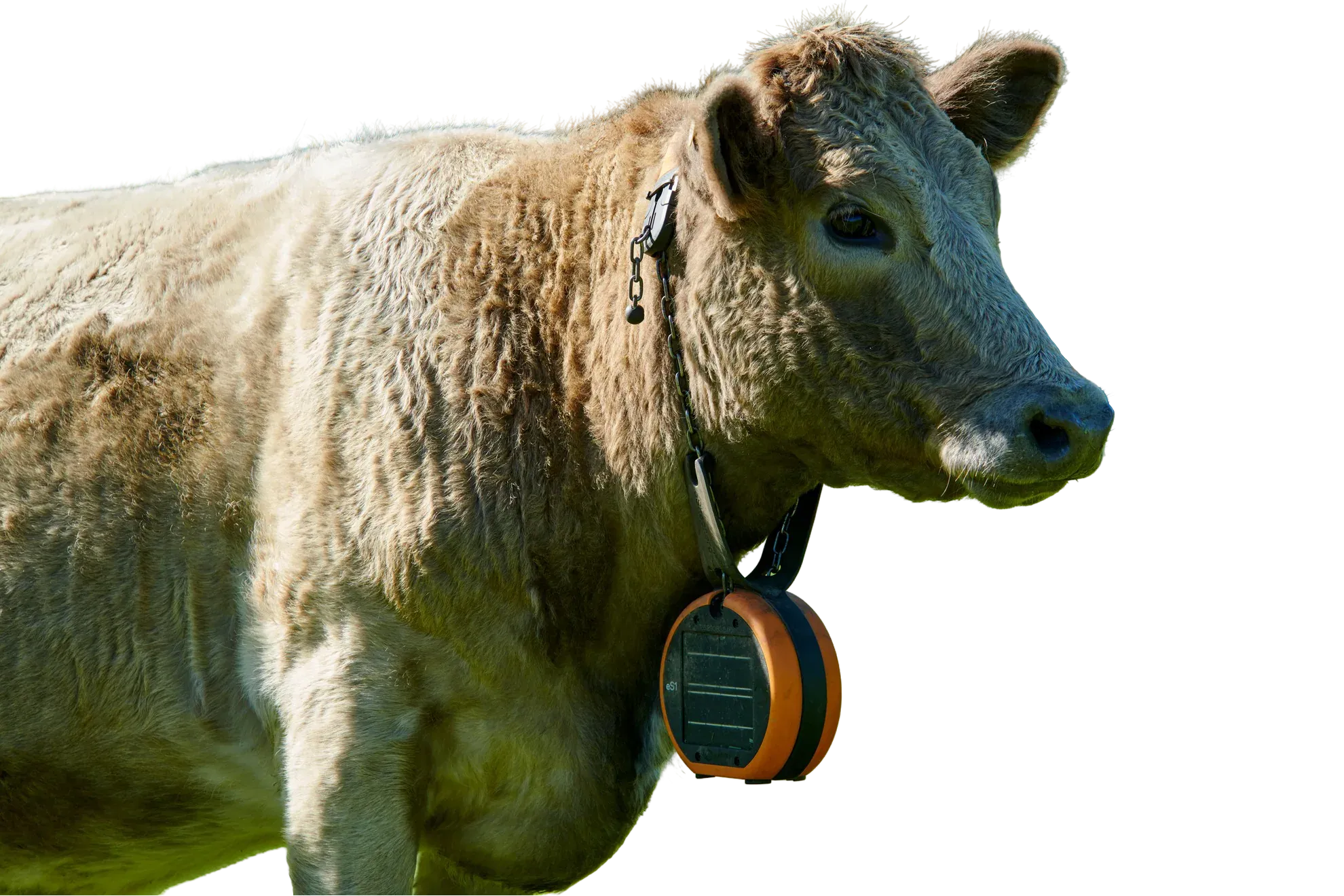
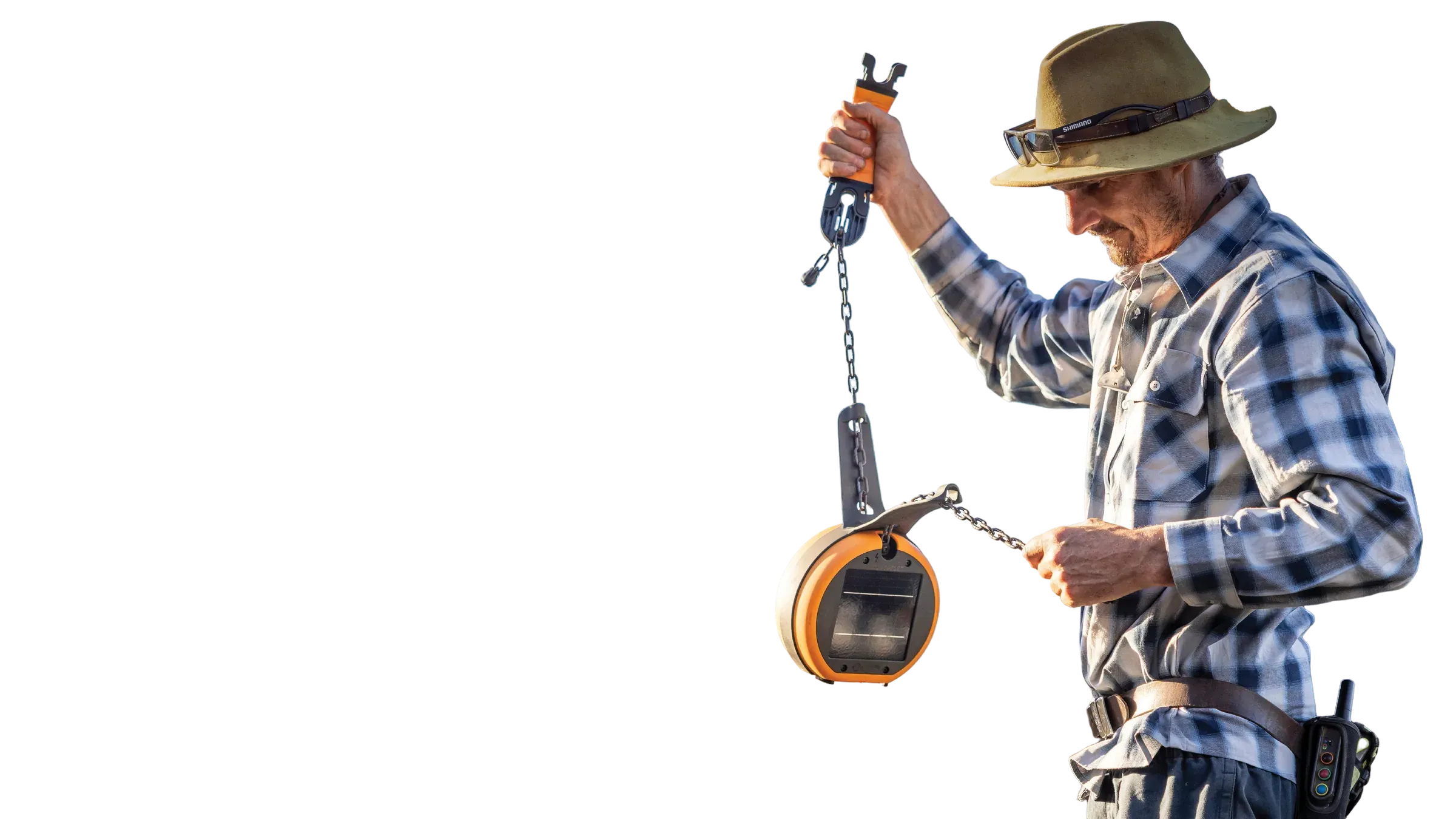
eShepherd uses a simple buckle and clip system, similar to the snap clips on a backpack strap. Loosening it in the chute takes a moment. The collar hangs under the neck on chains, with gravity keeping the electrodes in contact. That works regardless of how clean or muddy the animal is. The
Nofence uses a similar gravity-based design with chains under the neck, and the electrode contact is reliable. The trade-off is that taking them off and refitting is more of a hassle, since they don't have an easy detachable system like eShepherd's clip.
Vence has been through several collar redesigns. The current version uses a carabiner system that takes a bit longer to fit and remove than the eShepherd clip approach. Like eShepherd and Nofence, the device hangs under the neck on chains, so electrode contact is reliable through gravity.
Halter uses a belt-style strap with the device sitting on top of the neck rather than under it. When the collar is clean, fitment is straightforward, though it takes longer than a clip. The harder part is when the collar gets caked in mud. Because the device sits on top, the strap has to be tighter to stop it sliding off, which means more fitment adjustments on growing animals.
If you're working through a big mob in one session, the difference between a buckle clip and a belt or carabiner is real. Small per animal, big across 200 head.
App experience
The app side has had a clear gap and it's worth getting right.
eShepherd has had both a fully featured mobile and web app since commercial sales started in 2022. You can do effectively everything from either one. The web app has a few extra small features, but day-to-day a
Halter was mobile-only from launch and only released a web app in 2025. Even now, the web app is view-only. All the actual work happens on the phone. If you like working on a computer, that's friction you'll feel daily. Their mobile app is well-built, so if you're a phone person it's a strong experience.
Nofence has a mobile app that's on par with eShepherd's for day-to-day virtual fencing. The two are equally capable for managing paddocks and animals on your phone. Where eShepherd pulls ahead is in two places: mob management is easier in the eShepherd app, and eShepherd has a full-featured web app that Nofence doesn't offer at all. If you want to plan grazing on a bigger screen, that's not a Nofence option.
Vence is the opposite: web app only, with a view-only mobile companion. Good if you live at a desk, awkward if you're out in the paddock.
eShepherd is the only one of the four where you genuinely don't have to choose. That mattered enough to Gallagher that it's been a core part of the product since day one.
Animal welfare and training
All four systems work the same way. An audio cue when the animal approaches the boundary, then a brief electrical pulse if they push through. Cattle learn fast. Most herds reach 95 to 98% containment in the first 72 hours, with full training in 3 to 10 days.
eShepherd was the first virtual fencing system to be legalised for commercial use in Australia. That matters because Australia has some of the strictest animal welfare requirements in the world for this category, and Gallagher had to demonstrate the system met them before being allowed to sell. Animal welfare has been baked into the design from the start, not bolted on later.
The eShepherd audio cue is 5 seconds, paired with learned avoidance behaviour. After training, most cattle respond to the audio alone without needing the pulse at all.
Performance side-by-side
For cattle, the published numbers stack up like this:
| eShepherd | Halter | Vence | Nofence | |
|---|---|---|---|---|
| Collar retention | 97% | 97% | 90% | 97% |
| Containment | 99% | 98% | 80 to 95% | 99% |
| Location update | Every 10 min | Every 10 min | Every hour | Every 5 min |
| VP activation time | About 20 min, or instant on Scheduled Moves | 12 min | 1 to 24 hours | 2 min |
| Cold weather tested | Down to | Fair | Fair | Norway-built, handles real cold |
| Min paddock size | No minimum | Unknown |
A few features that only some companies have:
Return to Paddock (eShepherd only): if an animal escapes, the system actively tries to bring them back before treating the escape as final.
Bad Paddock Alerts (eShepherd and Halter only): the system warns you if the virtual paddock you've drawn has no water access or has corners too tight to be safe.
Multiple mobs in one physical paddock (eShepherd, Vence, Nofence): manage separate groups in the same physical area. Halter is in beta on this for 2026.
Exclusion zones (eShepherd only): draw a no-go area around a barn, house, old machinery, or hazard. The other systems work around this with paddock geometry, but it's not the same.
Where eShepherd is the strongest fit
Putting it all together, eShepherd is the right call when:
You want the best long-term economics. Independent University of Arizona and Rangelands journal cost analyses both show eShepherd as the cheapest system on a 10-year basis in both cellular and base station categories. The long collar life and low monthly fee compound over the life of the system.
You want pasture monitoring built in, with no manual calibration, no plate meter, no walks. End-to-end automatic.
You want to start small and scale up later. Twenty-collar minimum (NZ, US, Canada, UK) means you can run a real trial on one mob before going further. AU minimum is 60.
You've got mixed coverage across your property. The ability to mix cellular and LoRa neckbands on one platform is unique to eShepherd.
You already run Gallagher gear, or you want a single platform that handles fencing, weighing, water and animal performance together.
You want to manage from both phone and computer. Full-feature mobile and web from day one, no view-only compromise.
You care about fitment time when you're working a big mob. The buckle clip system is genuinely faster than the alternatives.
You care about sustainability and long-term hardware longevity. LiFePO4 batteries, 7 to 10 year design life, no cobalt or nickel mining.
You want a system designed with animal welfare in mind from the start. First virtual fencing system legalised for commercial use in Australia, where the bar is high.
Where another system might be the better call
Honest version. eShepherd isn't the right answer for everyone:
If you run sheep or goats, Nofence is the only option built for small ruminants. They're a good company with a great mobile app.
If you run a high-intensity dairy operation in a market where Halter operates and you want shed-integrated workflows and heat detection, Halter is purpose-built for that and worth a look.
If you're a very large extensive Western
What to look at next
If you're trying to figure out which system fits your operation, the practical things to assess:
How much cellular coverage you actually have across the property, not the marketing map, the real one. Whether the operation runs as one mob or several. What you already use for EID and animal management. Whether you'd rather own the hardware or lease it. The minimum herd size where the economics work for you.
We're happy to walk through it for your specific operation. The honest answer for some
Want to hear from
Coming to a field day, demo or industry event near you? See where we'll be →
Get a quote for your property →
Direct head-to-head comparisons
If you're weighing eShepherd against a specific competitor, the deep-dive articles cover the detail:
- eShepherd vs Halter
- eShepherd vs Vence
- eShepherd vs Nofence (for cattle)
- Virtual fencing total cost of ownership
This article reflects publicly available information on competing systems as of May 2026. Pricing and specifications change. Check directly with each vendor for current numbers. Where we've quoted competitor pricing, it's drawn from published reporting (Progressive Dairying, Western Landowners Alliance, Farm Progress, Box X Ranch comparisons) and the vendors' own public material. The total cost of ownership analysis cited is from the Rangelands journal paper "The economic fundamentals of virtual fencing compared to traditional fencing" (Boyer et al., 2025) and the University of Arizona Cooperative Extension virtual fencing comparison.