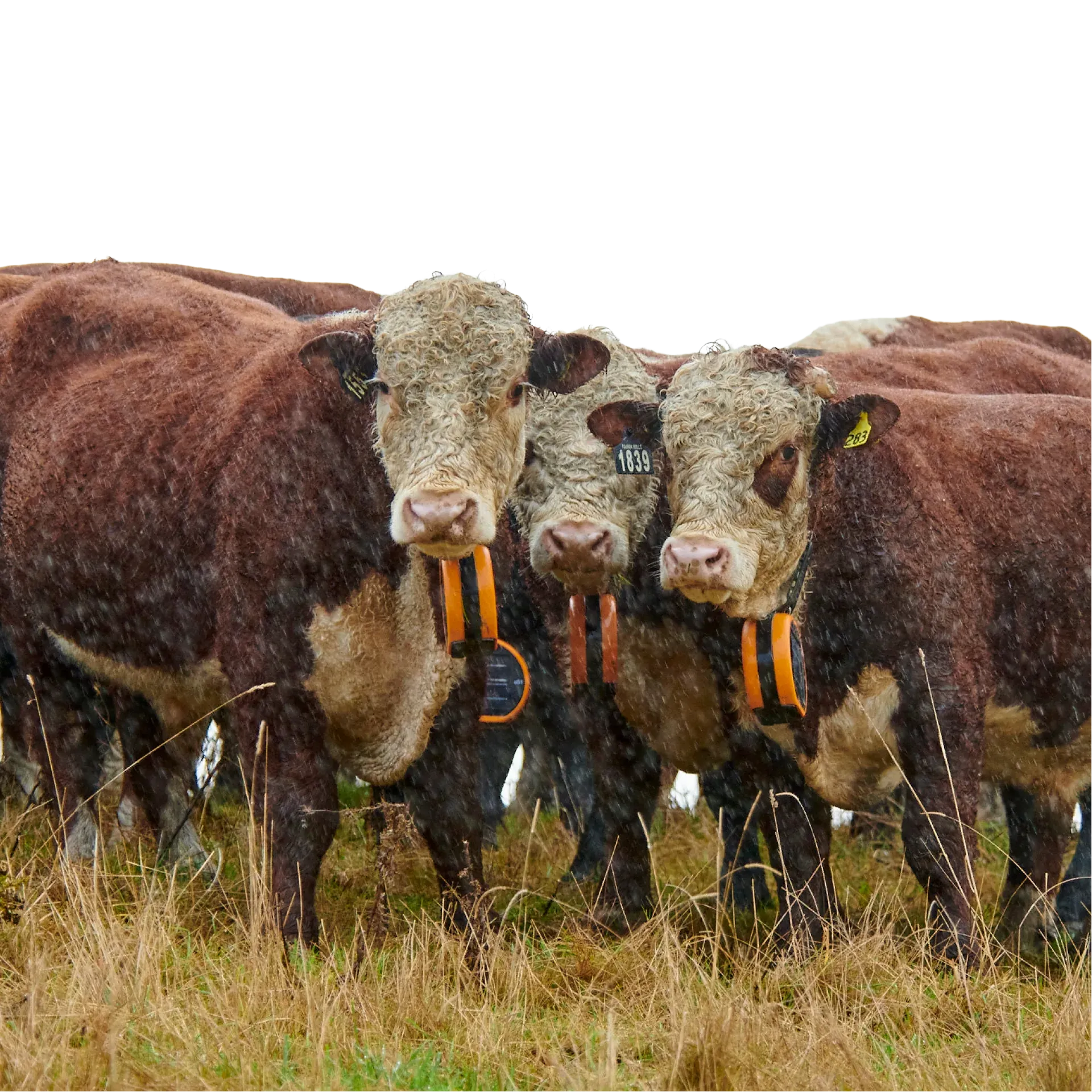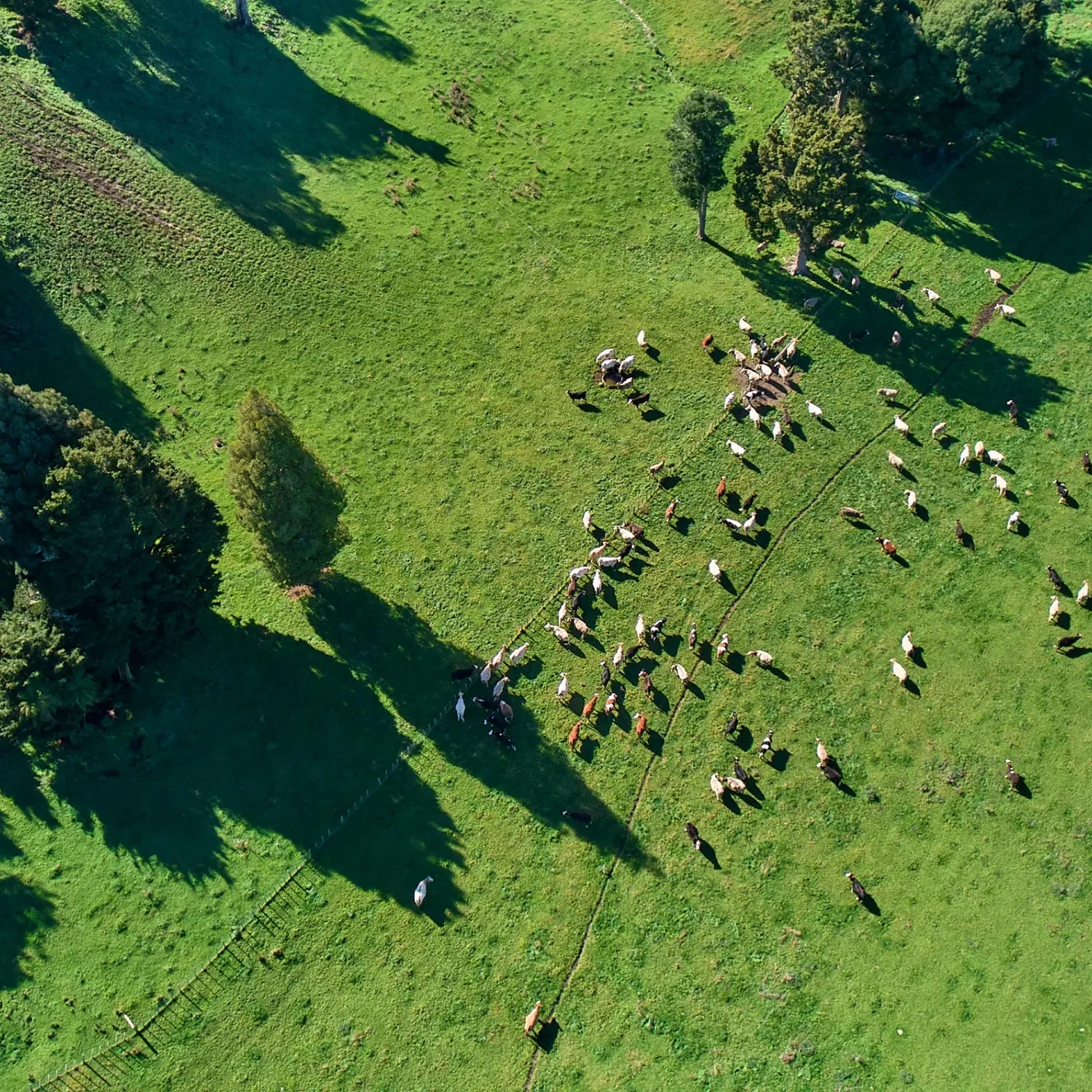
If you're looking at virtual fencing for cattle, eShepherd and Halter are probably the two systems you're weighing up. Both come from companies based in New Zealand, both use GPS-enabled neckbands and audio cues, both work at scale on commercial operations.
Underneath the surface they're built very differently. Different battery chemistry, different connectivity, different pricing models, different ecosystems. This article goes through them side by side and tells you straight which one fits which operation.
The headline differences
| eShepherd | Halter | |
|---|---|---|
| Built by | Gallagher (livestock since 1938) | Halter (NZ startup, founded 2016) |
| Pricing model | Buy hardware, low monthly fee | Subscription, two-year minimum contract |
| Battery chemistry | LiFePO4 (no cobalt or nickel) | Lithium-ion |
| Battery life | 7 to 10 years | About 5 years |
| Connectivity | Cellular and LoRa, mix on one property | LoRa towers, with satellite option |
| Pasture monitoring | Yes, with auto-calibration | Yes |
| Animal weighing | Yes (Gallagher integration) | No |
| Apps | Full mobile and web | Mobile (web view-only since 2025) |
| Min order | 20 head (60 head in AU) | 50 head |
| Countries | 14+ | AU, NZ, US |
Cost over time
This is where most comparisons fall apart, because year-one cost and 10-year cost tell completely different stories. Independent research from the University of Arizona Cooperative Extension and the Rangelands journal ran the numbers. Here's what they found per cow on a base-station setup:
| Over 10 years | |
|---|---|
| eShepherd | $530 per cow |
| Halter | $660 per cow |
That works out to eShepherd being about 20% cheaper per cow per year on a 10-year horizon ($53/cow/year vs $66/cow/year). The reason is collar life. eShepherd's 7-to-10-year neckband means you don't replace hardware halfway through. Five-year collars mean you do.
If you're making a 10-year bet on a system, eShepherd is the more economical choice. The longer the time horizon, the bigger the gap.
Subscription stability
There's a pattern with subscription pricing across the wider economy: rates rise faster than inflation. Netflix has lifted prices five times in the last decade. Xero pushes its subscription up year after year. SaaS pricing climbs whenever the company needs to widen its margin or hit a quarterly target. The headline per-animal-per-year number a subscription system quotes today is rarely the number you're paying five years in.
Halter's pricing model is purely subscription, with two-year minimum contracts that renew at whatever the going rate is at the time. The TCO numbers above assume a stable rate; if Halter's per-animal subscription rises 5% a year on renewal, the 10-year number is meaningfully higher than what's quoted up front.
The eShepherd subscription is the data cost. Nothing more, nothing less. There's no platform margin layered on top, no feature paywall, no premium tier waiting to swap in. To hold that promise stable, eShepherd has multi-year contracts locked in with the major cellular carriers (Verizon, AT&T, T-Mobile, US Cellular, Telstra, Spark, and the global IoT network providers) that fix the data cost for the life of your hardware. The rate you sign at is the rate that holds.
For operations weighing the long-run cost, that distinction matters. A subscription contract you can't anchor against can quietly compound into a different deal than the one you signed.
Battery and power
eShepherd is the only virtual fencing system using lithium iron phosphate (LiFePO4) batteries. Halter uses standard lithium-ion. The difference matters more than it sounds.
LiFePO4 has no cobalt and no nickel. Standard lithium-ion depends on both. Cobalt mining in particular has well-known human rights and environmental issues. LiFePO4 sidesteps that.
LiFePO4 lasts roughly twice as many charge cycles as lithium-ion. That's a big part of why eShepherd's 7-to-10-year battery life is realistic where Halter's sits around 5.
LiFePO4 is far more thermally stable. It won't catch fire if punctured or overheated. On a collar that lives outdoors on an animal for a decade, that matters.
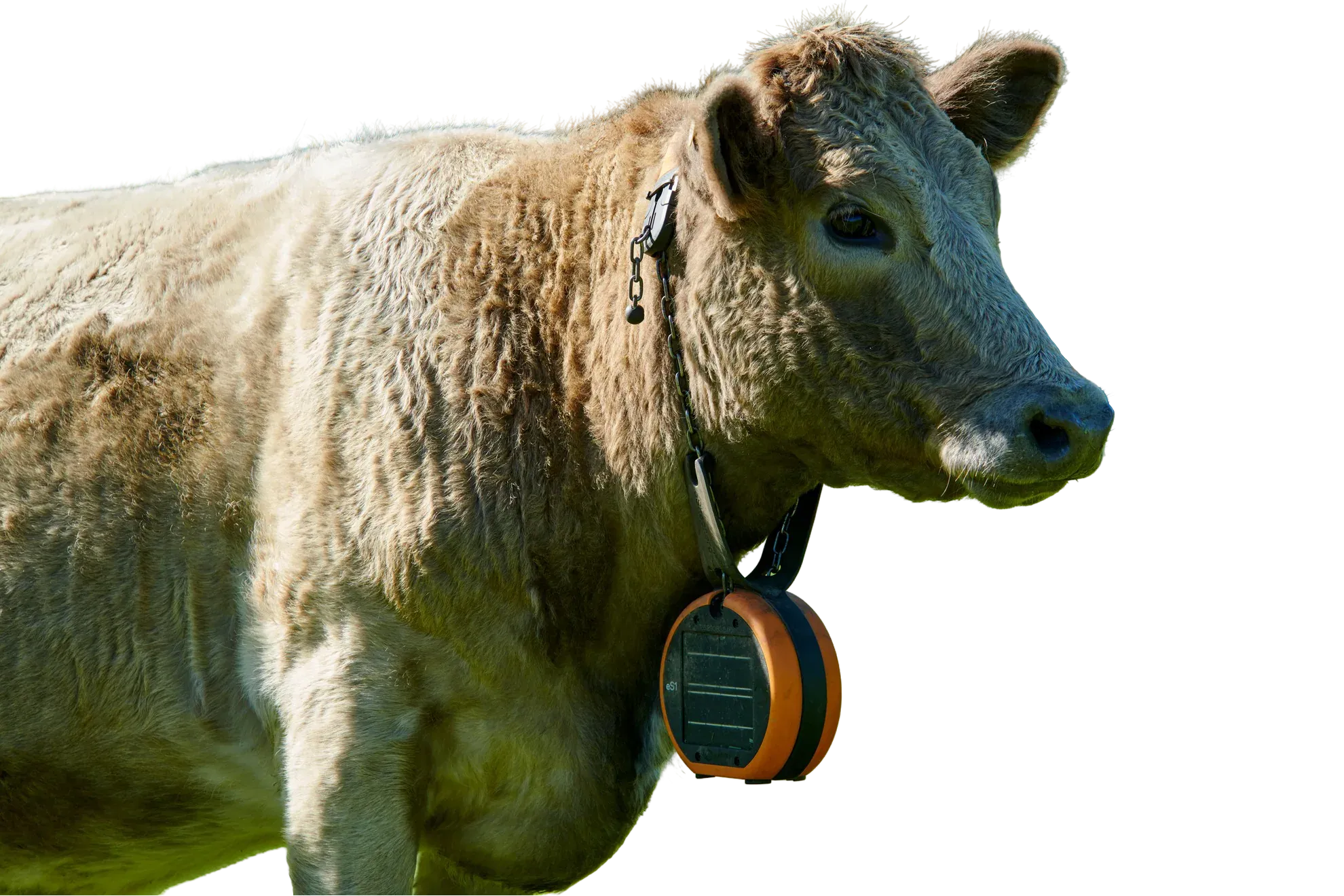
On capacity, the eShepherd neckband carries 38.4 Wh of battery and 4.4 W of solar. Halter carries 10.1 Wh of battery and 2.4 W of solar. Think of it as a fuel tank and refill rate: eShepherd has nearly four times the tank and 80% more solar refill power. Halter's public spec says 14 days of running without sun, but real-world reports from
Connectivity
eShepherd sells the same neckband in two flavours. A cellular version that connects to local mobile networks via a global SIM that roams across all major carriers, and a LoRa version that talks to a base station. You can mix both on one property under one platform. If you've got coverage across most of the
Halter has historically required its own LoRa towers and recently launched a satellite tier. The satellite option works in places without cellular, but it currently runs about 25% more per animal per year on top of the standard subscription. Halter also requires 100% coverage across your property, which means more base stations than eShepherd. Where eShepherd might quote three or four base stations for a property, Halter often quotes five to nine.
If you've got mixed coverage, eShepherd's flexibility is the cleaner answer. If you've got no cellular at all, both have a tower-less option, but eShepherd cellular addresses the same use case at a lower running cost than Halter satellite.
Pasture monitoring
Both eShepherd and Halter offer pasture monitoring built into the platform. Both use satellite multispectral imagery to measure grass cover and growth.
The difference is calibration. Satellite imagery on its own is approximate. To turn it into accurate cover numbers, you need ground truth, which traditionally means walking paddocks with a plate meter or rising plate every week and feeding measurements back into the system.
eShepherd uses patented ground sensors that automatically calibrate the satellite imagery. No pasture walks. No plate meter readings. No photos. The sensors live in the paddock and the system fuses everything automatically. End-to-end automatic.
We don't build products that add work to your day. We build products that take it off.
Animal weighing and the broader ecosystem
eShepherd is the only virtual fencing system that integrates with automatic in-paddock weighing. Gallagher Vision Weigh captures animal weights without you running them through a yard, and those weights are coming into the eShepherd platform.
That's part of a bigger story. Gallagher has been in livestock since 1938 and runs a complete ecosystem: virtual fencing, automatic weighing, water monitoring, energizers, EID tags, traditional fencing. All of it is being unified into a single sign-on platform through 2026 and 2027. Halter has its own platform with strong dairy-specific tooling, but the breadth of what eShepherd connects to isn't something Halter has built or is trying to build.
Each eShepherd neckband also has a built-in RFID matching the animal's EID tag, so when you draft cattle through a Gallagher race, the system already knows who's who.
Apps
eShepherd has had both a fully featured mobile and web app since commercial sales started in 2022. You can do effectively everything from either one.
Halter was mobile-only from launch and only released a web app in 2025. Even now, the Halter web app is view-only. All the actual work happens on the phone. If you like working on a computer, that's friction you'll feel daily.
Neckband fitment
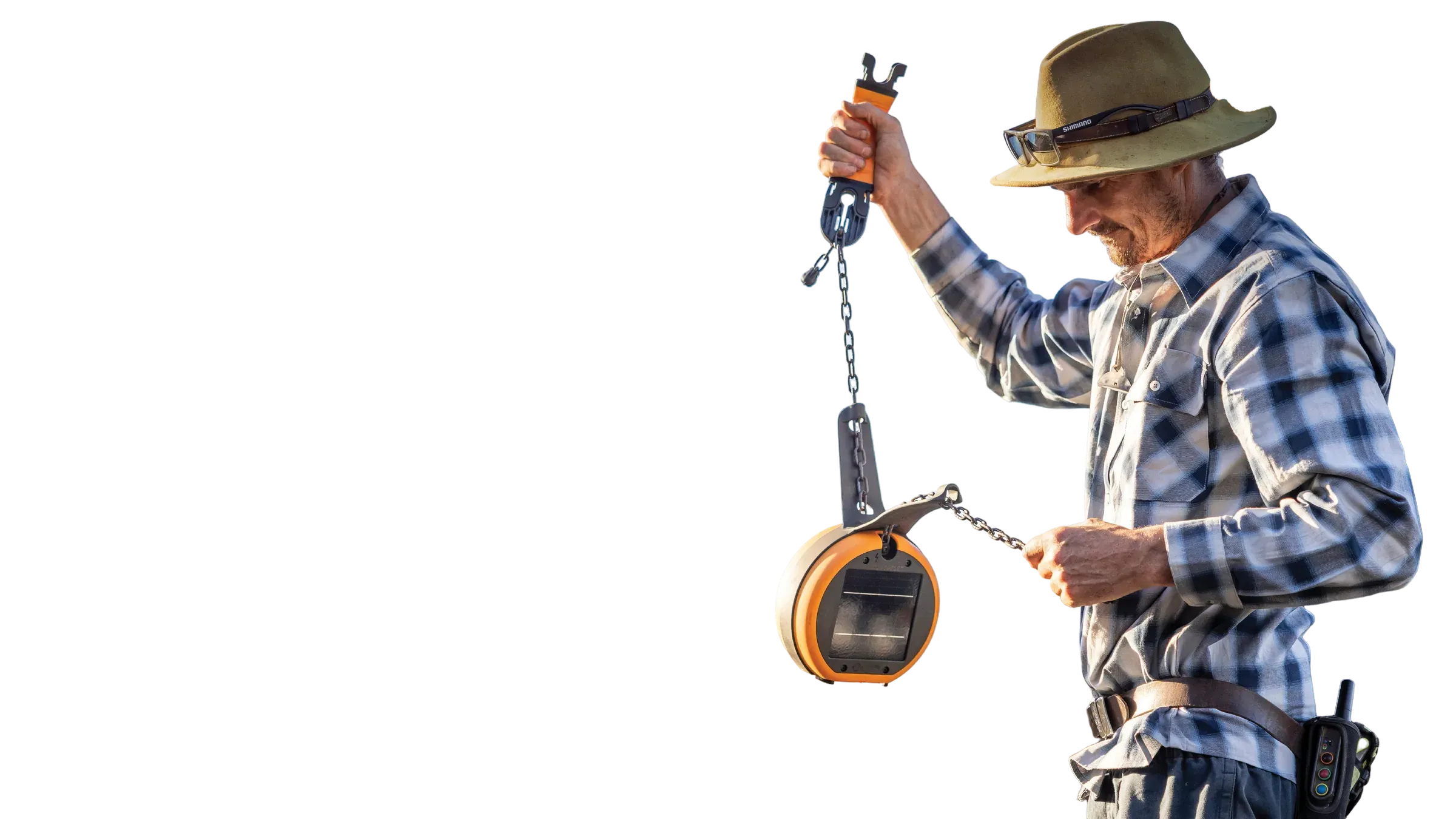
eShepherd uses a simple buckle and clip system, similar to the snap clips on a backpack strap. Loosening it in a chute or crush takes a moment. The collar hangs under the neck on chains, with gravity keeping the electrodes in contact regardless of how clean or muddy the animal is.
Halter uses a belt-style strap with the device sitting on top of the neck. When the collar is clean, fitment is straightforward but slower than a clip. When the collar is caked in mud, adjustment gets messier. The strap also has to be tighter to stop the device sliding off, which means more fitment adjustments on growing animals.
Across 200 head in one session, the difference adds up.
Animal welfare
eShepherd was the first virtual fencing system legalised for commercial use in Australia. Australia has some of the strictest animal welfare requirements in the world for this category. Gallagher had to demonstrate the system met them before being allowed to sell. Animal welfare has been baked into the design from the start.
The audio cue is 5 seconds, paired with learned avoidance behaviour. After training, most cattle respond to the audio alone without needing the pulse at all.
Where Halter fits
Halter is purpose-built for dairy and has heat detection and shed-integrated workflows that eShepherd doesn't replicate. If you're running a high-intensity dairy operation in Australia, New Zealand or the United States, Halter is worth a serious look. The dairy version is not currently available in Canada or the UK, with no announced plans to release it there.
For beef, hill country, mixed grazing or any operation where the long-term economics matter most, eShepherd is the stronger system.
What to do next
Get an indicative quote for your operation →
Want to hear from
Coming to a field day, demo or industry event near you? See where we'll be →
Read the broader four-system comparison: How eShepherd compares to other virtual fencing solutions.
This article reflects publicly available information on Halter as of May 2026. Pricing and specifications change. Cost figures are drawn from the Rangelands journal paper "The economic fundamentals of virtual fencing compared to traditional fencing" (Boyer et al., 2025) and the University of Arizona Cooperative Extension virtual fencing comparison.