Availability: Nofence is not currently available for sale in Australia or New Zealand. This comparison is provided for international reference.
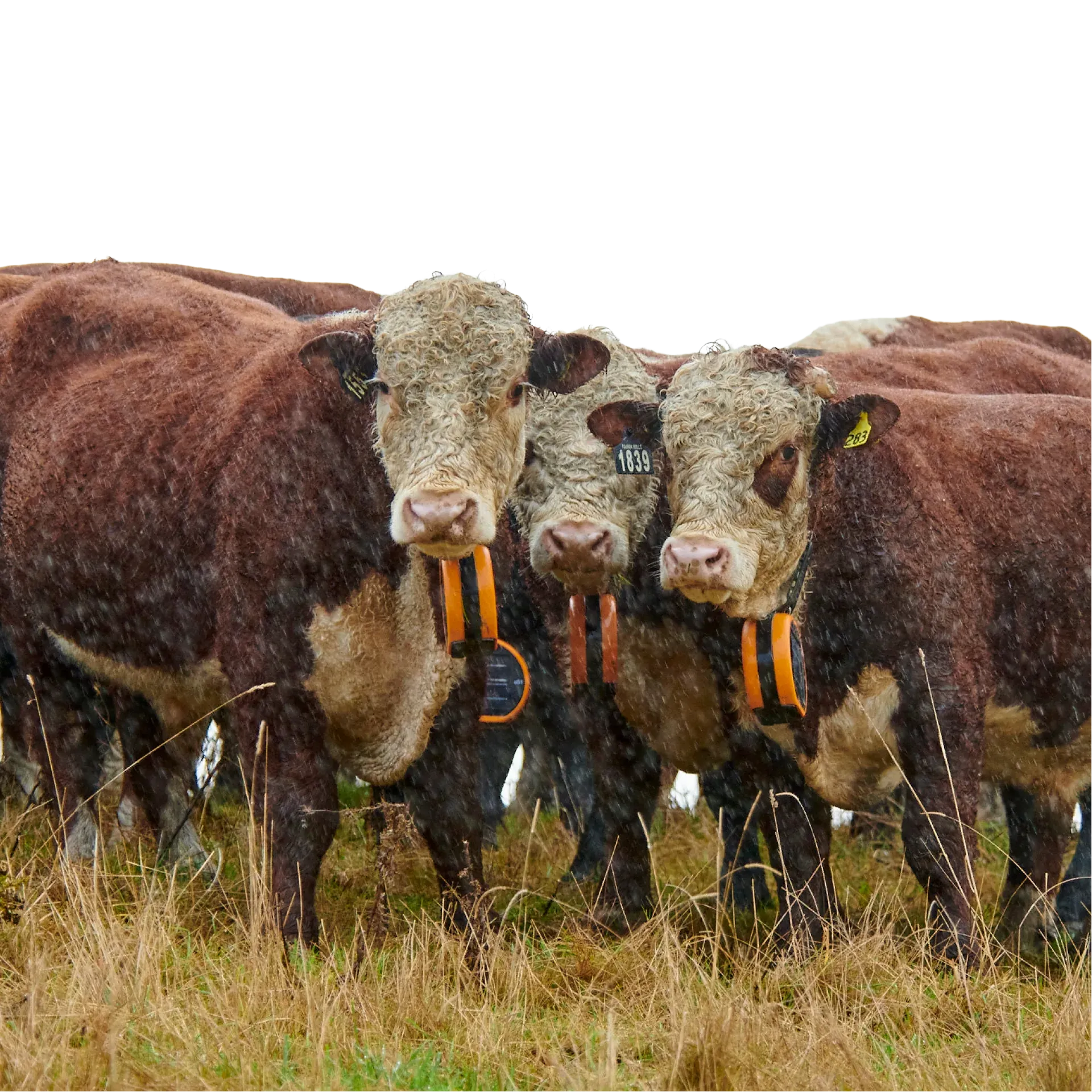
Of the four main virtual fencing systems on the market, eShepherd and Nofence are the closest to each other in approach. Both run a buy-the-hardware, pay-per-month pricing model. Both lead with cellular as the primary connectivity option. Both have strong containment numbers and reliable solar-powered collars.
This article compares them directly for cattle operations. Nofence is the only system on the market that does sheep and goats, so if that's your use case, Nofence is the answer and you don't need this comparison. For cattle, here's the honest read.
The headline differences
| eShepherd | Nofence | |
|---|---|---|
| Built by | Gallagher (livestock since 1938) | Nofence (Norway, founded 2011) |
| Pricing model | Buy hardware, monthly fee | Buy hardware, annual subscription |
| Battery chemistry | LiFePO4 (no cobalt or nickel) | Lithium-ion |
| Battery life | 7 to 10 years | About 5 years |
| Connectivity | Cellular and LoRa fallback | Cellular only |
| Pasture monitoring | Yes, with auto-calibration | No |
| Animal weighing | Yes (Gallagher integration) | No |
| Apps | Full mobile and web | Mobile only (no web) |
| Min order | 20 head | 5 head |
| Livestock | Cattle | Cattle, sheep, goats |
| Countries | 14+ | Most of Europe, US, Canada coming. Not in AU or NZ |
Cost over time
The University of Arizona Cooperative Extension and the Rangelands journal both ran independent total cost of ownership analyses across virtual fencing systems. Per cow on cellular setups, the numbers come out like this:
| Over 5 years | Over 10 years | |
|---|---|---|
| eShepherd cellular | $370 | $490 |
| Nofence | $527.50 | $707.50 |
That works out to eShepherd being about 30% cheaper per cow per year on a 10-year horizon ($49/cow/year vs $71/cow/year).
The reason is collar life. eShepherd's 7-to-10-year LiFePO4 neckband means you don't replace hardware halfway through. Nofence's 5-year battery life means you do, and the cost compounds across the long horizon.
Battery and power
eShepherd is the only virtual fencing system using lithium iron phosphate (LiFePO4) batteries. Nofence uses standard lithium-ion. The difference is real:
LiFePO4 has no cobalt and no nickel. Standard lithium-ion depends on both. Cobalt mining in particular has well-known human rights and environmental issues.
LiFePO4 lasts roughly twice as many charge cycles as lithium-ion. That's why eShepherd's 7-to-10-year battery life is achievable when Nofence sits at around 5.
LiFePO4 is far more thermally stable. It won't catch fire if punctured or overheated.
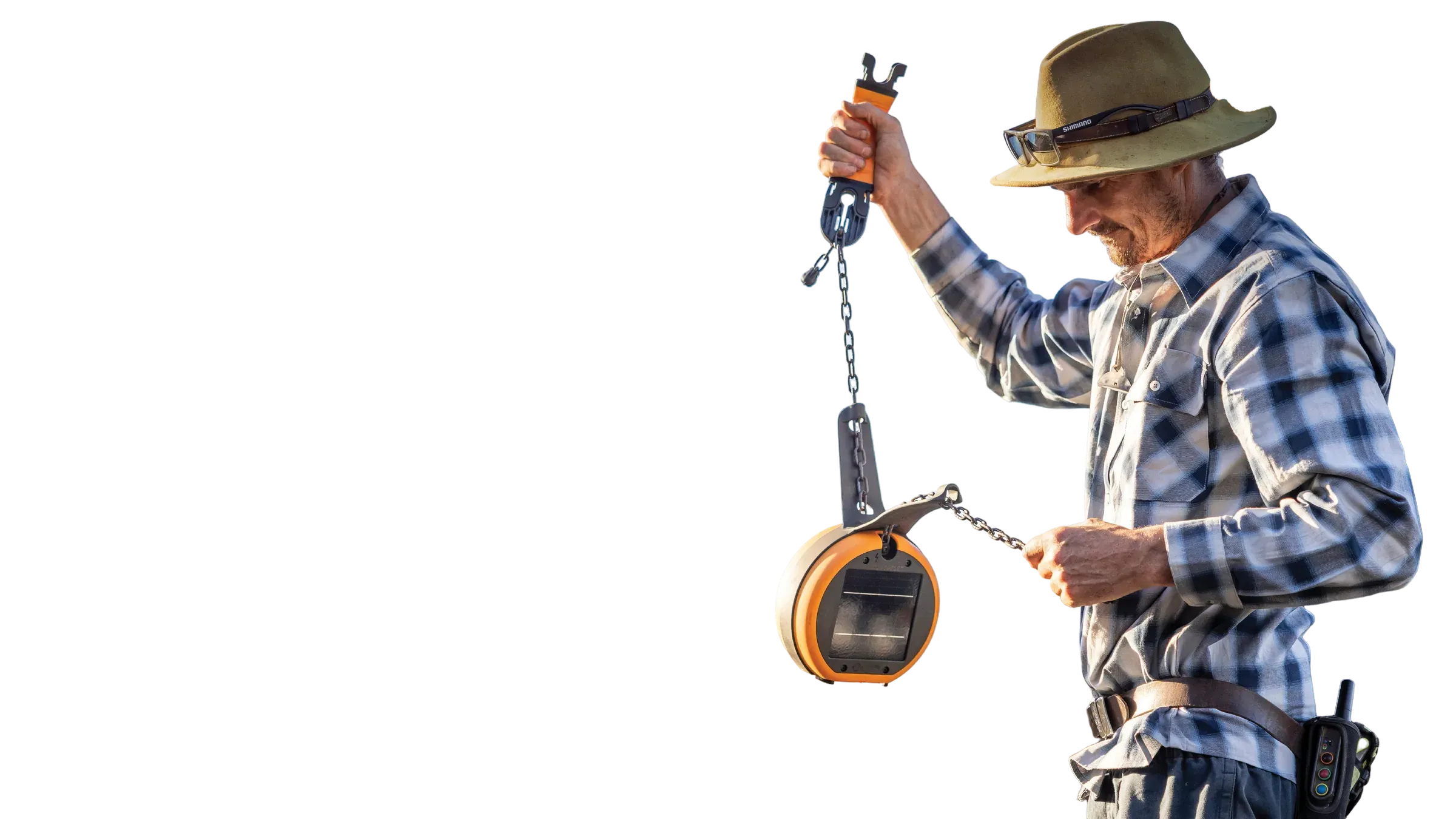
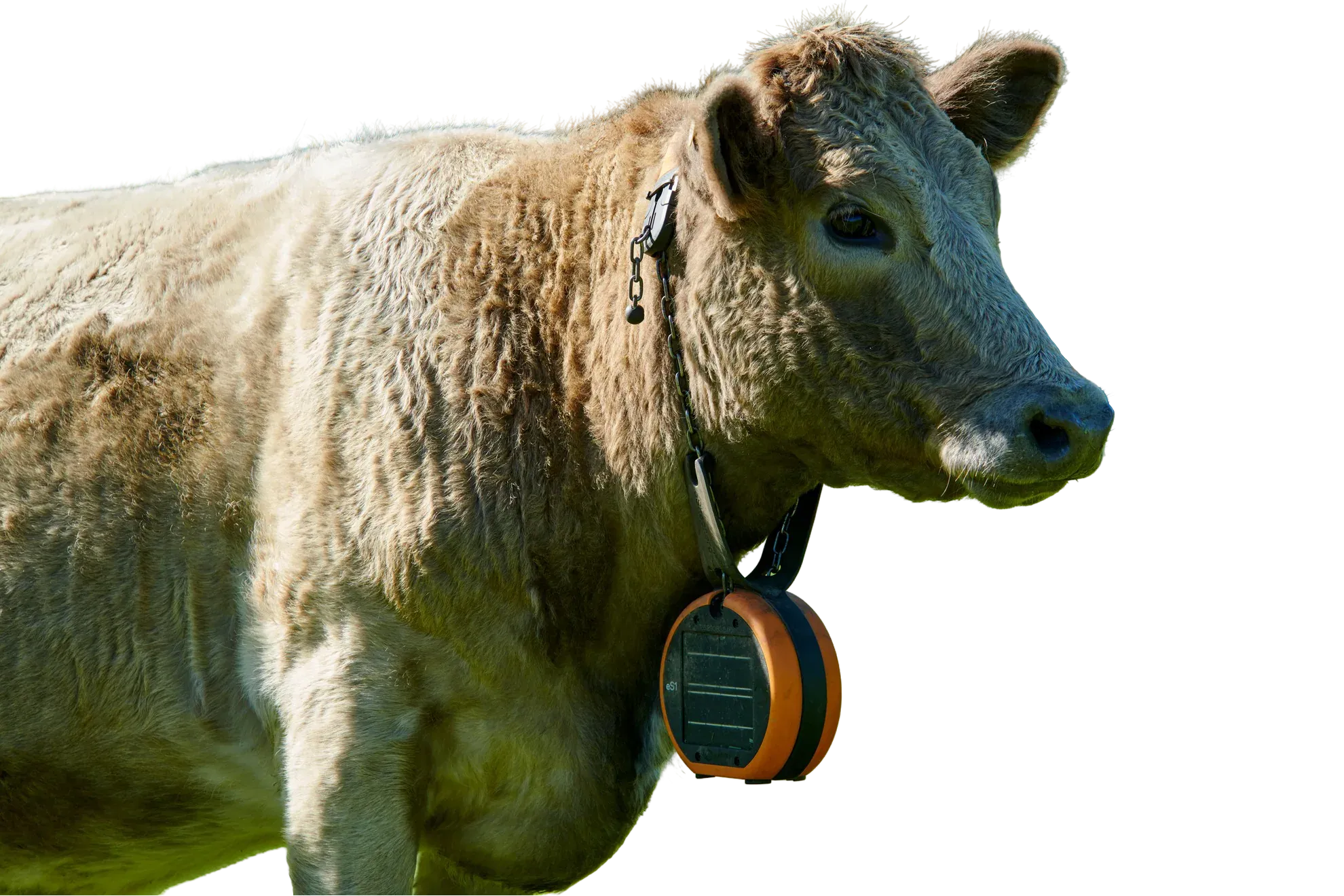
On capacity, the eShepherd neckband carries 38.4 Wh of battery and 4.4 W of solar. Nofence carries 72 Wh and 2.3 W. Nofence has the bigger fuel tank, eShepherd has nearly twice the solar refill rate. Both deliver good real-world solar life, but eShepherd's combination of LiFePO4 chemistry and the Gallagher build approach is what enables the 7-to-10-year design life vs Nofence's 5.
Connectivity
Both eShepherd and Nofence use CAT-M1 and NB-IoT cellular technology. These aren't the bands your phone uses. They're cellular IoT bands designed specifically for low-power devices in the field, with better rural coverage than your phone gets.
Both also use Bluetooth Low Energy (BLE) mesh. Every collar can talk to every other collar in the herd. If one animal is on a ridge with a signal and the rest are in a creek bottom without one, the data still flows through the mesh. eShepherd and Nofence handle this in similar ways.
The difference: eShepherd has a LoRa fallback option. The same neckband can run on cellular or on a LoRa base station, and you can mix both on one property. If you've got coverage across most of the
Pasture monitoring
eShepherd offers pasture monitoring built into the platform. Satellite multispectral imagery, automatically calibrated by patented ground sensors. No pasture walks. No plate meter. No manual calibration data. End-to-end automatic.
Nofence doesn't offer pasture monitoring. It's a virtual fencing system and animal management tool, full stop.
If you're managing rotational grazing seriously, having pasture cover and growth data tied into the same platform that's managing your fences is a meaningful operational advantage.
Animal weighing and the broader ecosystem
eShepherd is the only virtual fencing system that integrates with automatic in-paddock weighing. Gallagher Vision Weigh captures animal weights without you running them through a yard, and those weights are coming into the eShepherd platform.
That's part of a bigger story. Gallagher has been in livestock since 1938 and runs a complete ecosystem: virtual fencing, automatic weighing, water monitoring, energizers, EID tags, traditional fencing. All of it is being unified into a single sign-on platform through 2026 and 2027.
Each eShepherd neckband has a built-in RFID matching the animal's EID tag, so when you draft cattle through a Gallagher race, the system already knows who's who.
Nofence is standalone. Good at what it does, but you'll be running it alongside other systems for weighing, water and animal performance, with no integration between them.
Apps
eShepherd and Nofence have mobile apps that are equally capable for day-to-day virtual fencing. Both are well-designed, both are intuitive on the phone, both let you manage paddocks and animals without friction.
Where eShepherd pulls ahead is in two places.
Mob management is easier in the eShepherd app. Working with multiple groups in the same physical area, moving animals between mobs, and tracking groups separately is more streamlined.
eShepherd has a fully featured web app since 2022. Nofence doesn't have a web app at all. If you want to plan grazing on a bigger screen, build out paddock systems, or sit at a desk to do detailed work, eShepherd lets you. Nofence is phone-only.
For some
Animal welfare
eShepherd was the first virtual fencing system legalised for commercial use in Australia. Australia has some of the strictest animal welfare requirements in the world for this category, and Gallagher had to demonstrate the system met them before being allowed to sell.
The eShepherd audio cue is 5 seconds, paired with learned avoidance behaviour. After training, most cattle respond to the audio alone without needing the pulse at all.
Nofence has been operating since 2011 and has a strong welfare record of its own. Both systems are well-designed on this front. The eShepherd Australian regulatory approval is just an additional public benchmark.
Where Nofence fits
If you run sheep or goats, Nofence is the answer. They're the only virtual fencing company that builds for small ruminants, and they do it well.
If you run cattle on a small operation with reliable cellular coverage and you want a phone-first experience without needing pasture monitoring, weighing, or a desktop interface, Nofence is a perfectly capable system.
For most cattle operations where you want the longer-term economics, the integrated ecosystem, the pasture and weighing data, the LoRa fallback option for connectivity gaps, and a desktop interface alongside the phone, eShepherd is the stronger choice.
What to do next
Get an indicative quote for your operation →
Want to hear from
Coming to a field day, demo or industry event near you? See where we'll be →
Read the broader four-system comparison: How eShepherd compares to other virtual fencing solutions.
This article reflects publicly available information on Nofence as of May 2026. Pricing and specifications change. Cost figures are drawn from the Rangelands journal paper "The economic fundamentals of virtual fencing compared to traditional fencing" (Boyer et al., 2025) and the University of Arizona Cooperative Extension virtual fencing comparison.