Protecting the Great Barrier Reef catchment, without a single post
“We're protecting the catchment without putting a single post in the ground.”
Bristow Hughes · Burdekin River catchment, QLD, Australia
eShepherd might be the next evolutionary step in pasture management, but one of our most consequential trials tested its impact on protecting one of the world’s oldest natural treasures — the Great Barrier Reef.
Led by Kevin Fischer (Head of Finance and Operations for eShepherd) and Andrew Zipsin (Applications and Customer Support Leader), Gallagher worked on a project funded by the Great Barrier Reef Foundation and Strathalbyn Station — owned by the Wentworth Cattle Co — to look at ways of protecting the Reef from sedimentation run-off using virtual fencing.
The set-stocking problem
Strathalbyn Station sits along the Burdekin River near Dalbe in Queensland. The dominant grazing practice in the catchment is set stocking — animals graze the same area year-round. The most fertile soils are near the waterways, so cattle congregate there. Country further out goes underutilised; the grass becomes stale and unpalatable. Overgrazing closest to the water leaves topsoil bare and exposed, and during the wet season it washes downstream.
Until now, the cost and feasibility of conventional fencing has been prohibitive for large Australian properties. With few options, farmers keep operating with traditional, destructive practices.
What changed
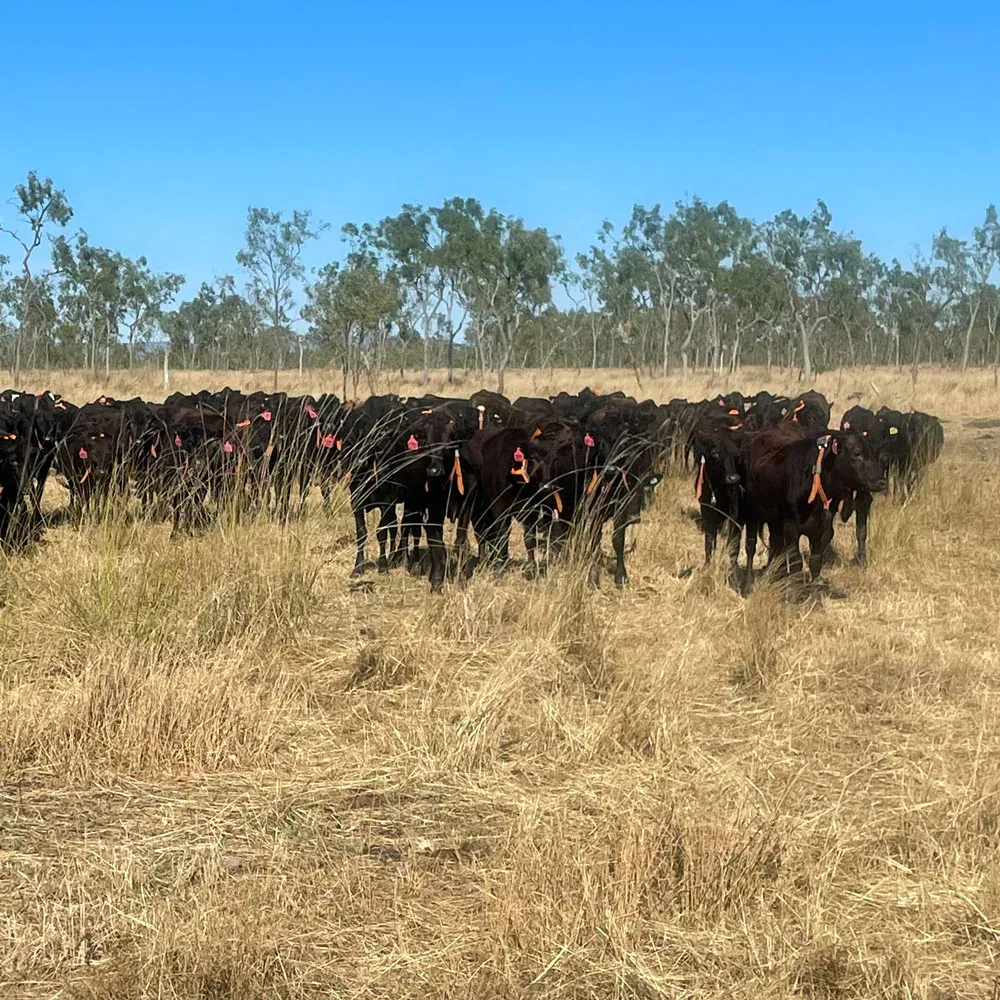
In April 2021, 577 eShepherd neckbands were fitted to Wagyu-cross female beef cattle. For the first time, the manager could control where the herd grazed — at scale and without a wire.
Cattle were held in the underutilised areas, eating what they could and trampling the rest, while fertilising the ground. Intensified animal activity followed by periods of rest stimulated intense regrowth — and in turn made those previously unpalatable areas the sweetest next time animals were brought through. The riparian zones got rest. The underutilised country got attention.
Over time the practice improves the health of the pasture across the property, leading to better moisture retention and ground cover — the best defence against sediment runoff into the river system.
Result
The trial closed out with the eShepherd system clearly delivering the desired outcomes. By holding the animals in allocated areas, the pasture regeneration objectives were met.
In his close-out interview, Strathalbyn Station owner Bristow Hughes said he “believes that the correct application of this technology has the potential to transform and protect the landscape in the region, whilst achieving substantial gains in productivity and profitability.”
Gallagher and Strathalbyn have committed to future trials evaluating eShepherd’s potential for more complex applications in the catchment.