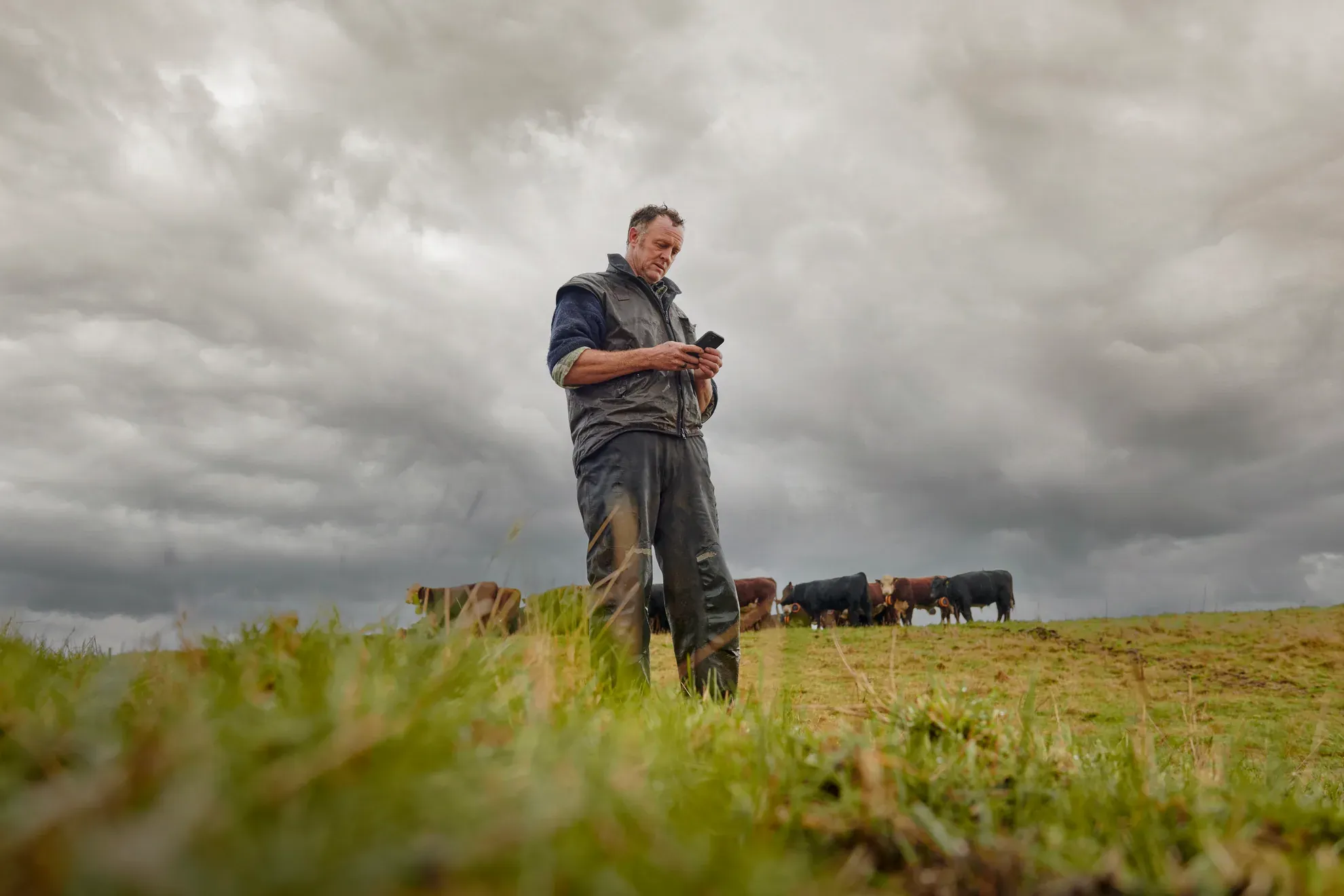
Eight mobs of bulls, drawn on a phone
“It's amazing how quick the cattle learn to stay behind the line.”
Mathew & Gemma Barham · Hawkes Bay, NZ
Mathew and Gemma Barham run beef cattle across 1,020 ha of steep Hawkes Bay hill country. The land doesn’t lend itself to permanent fencing — the slopes that need rotating are the slopes nobody wants to drive a post into. Eight mobs of bulls have to land in the right paddock at the right time, and on a working farm there isn’t time to wait.
How it actually fits into a working week
“I schedule the break for all 8 mobs to update at 6am every morning. By the time I’m driving around the farm, they are already on their new break — every morning by 7am.”
The boundaries get redrawn the night before, the neckbands receive the update over cellular while the team’s still in the kitchen, and the mobs are on their new break before the first ute leaves the shed.
What changed
- Eight mobs, all on rotation, planned from the same map.
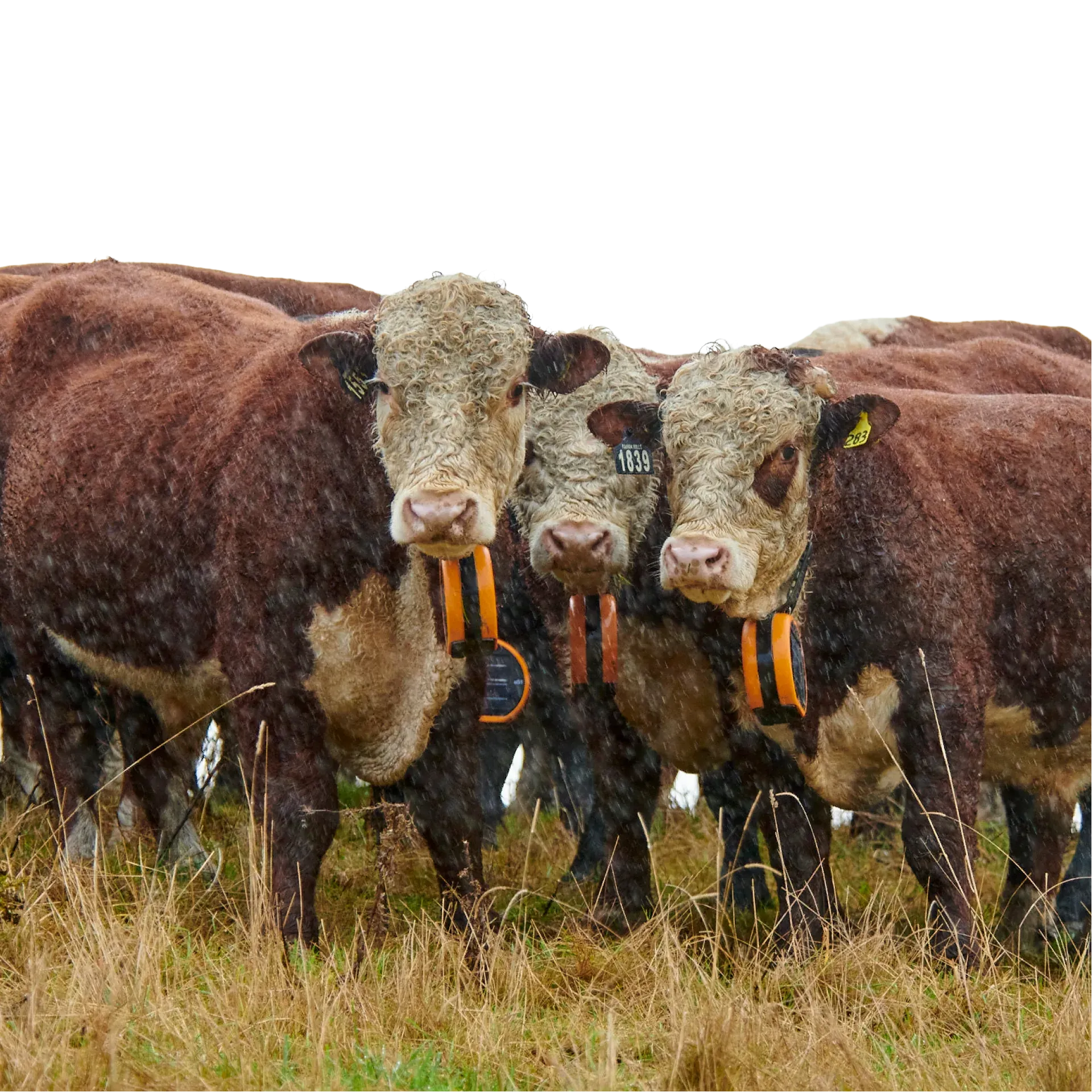
- Audio-first welfare — the cattle learnt the sound cue inside seven days. Pulses are rare and low-energy.
- Country we used to write off — the steep faces above the river are now part of the rotation, not the “leave it til December” patch.
The Barhams aren’t replacing a single working fence. They’re fencing country that never had one, on a schedule that never used to be possible.