Regenerative grazing with virtual fencing in Western Australia
“Our cows and calves have never done as well as they have since we've had eShepherd.”
Kevin Nettleton · South West, WA, Australia
In the sandy soils of southwest Western Australia, just over two hours south of Perth, Kevin Nettleton and his sons Ewen and Campbell are transforming the way they manage their Limousin cattle stud. Fifty breeding cows and thirteen yearling heifers — a small operation by Australian standards, running on the principle that smarter management beats more hectares.
From struggle to surplus
After years of battling poor pasture growth, Kevin made the shift to regenerative farming. “We’ve traditionally struggled for grass over the last three years. Now, we have a surplus — which is unbelievable.”
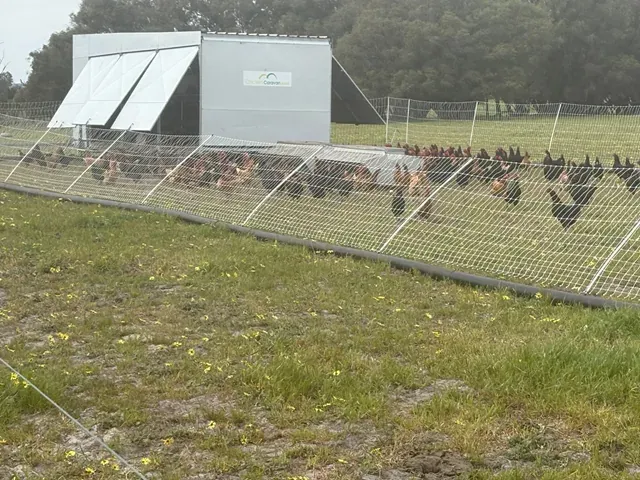
The change wasn’t just about grazing strategy. Youngest son Ewen introduced chickens into the rotation, moving them daily through the paddocks behind the cattle. Their manure has supercharged pasture regrowth — fresh feed reaches shin height within three weeks during the growing season.
The virtual fence drops in
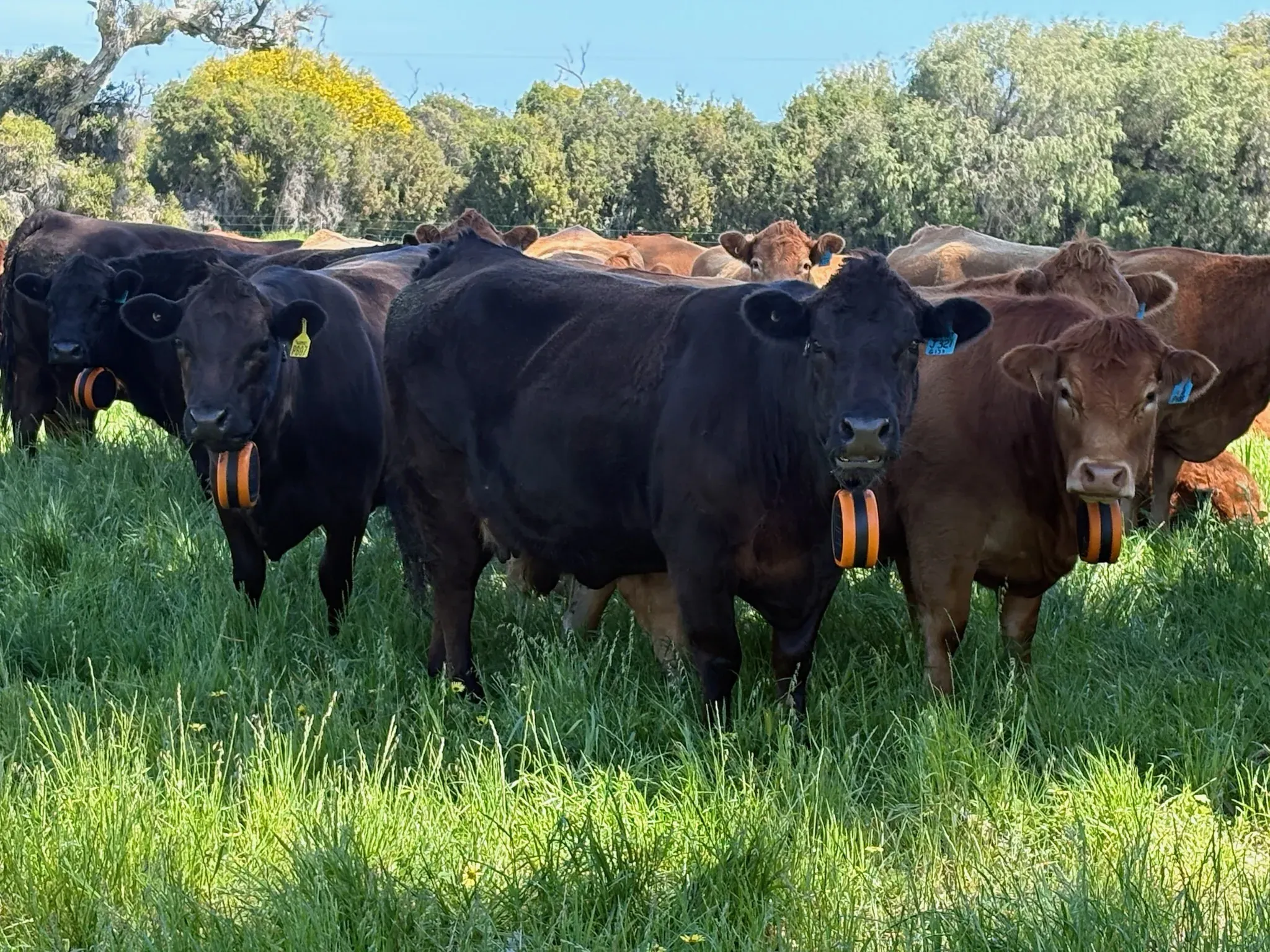
Kevin adopted eShepherd for the breeding cows. Reactions on first fitting ranged from calm acceptance to brief bucking; the animals adapted within days. “There wasn’t any lengthy training. They just responded to the audio warnings. We haven’t had any cross the virtual fence.”
Oldest son Campbell now runs the rotation through virtual paddocks. Stock move precisely, wet areas get protected during winter, and animals funnel through laneways to the yards — all without lifting a single polywire. “It’s been a game changer for us.”
Calving without standing in the paddock
Calving runs from March to June. Cows start in physical paddocks under close supervision; once calves are on the ground, the herd transitions to virtual paddocks and Kevin watches the data.
“You could be lying in bed, turn on the app, and see a cow off on her own. Most of the time, she’s calving or has just calved. It’s a very easy way to check without having to be there all the time.”
As calves grow they range further. Kevin recently spotted a group of fourteen calves grazing 150 metres from their mothers — relaxed, settled, with the cows resting nearby.
A leader emerges
Kevin’s cows have learned to read the system. “We just change the fences and they move accordingly. We’ve got a cow called T16 — she’s an ultimate leader. She knows when the fence has been shifted and brings the rest of the mob with her.”
Virtual laneways guide cattle to the yards for vet work and mustering. “Previously, you’d spend frustrating time on a quad trying to get them in. Now, it’s easy. Once they’re used to it, they don’t go where they’re not supposed to.”
What it does for the country
Despite operating in low-lying ground with variable weather, Kevin hasn’t had issues with battery life or connectivity. “We’ve just been changed over to 5G. We get one bar and have no issues.” Even in wet seasons, the system helps him exclude waterlogged areas and protect soil structure.
Why eShepherd works for the Nettletons
- Precision grazing across mixed soil types and leased land
- Improved cow and calf condition through rotational grazing
- Seamless integration with regenerative practices, including poultry
- Reduced stress and labour during calving and mustering
For Kevin, eShepherd isn’t just a tool. It’s a transformational shift in how he manages his stud. “It just makes management so much easier. It’s fabulous.”