Precision cell grazing on a Taranaki river flat
“I can be in beautiful sunny Wanaka… just sit down and do it. It makes it really easy.”
George Hardwick-Smith · Taranaki, NZ
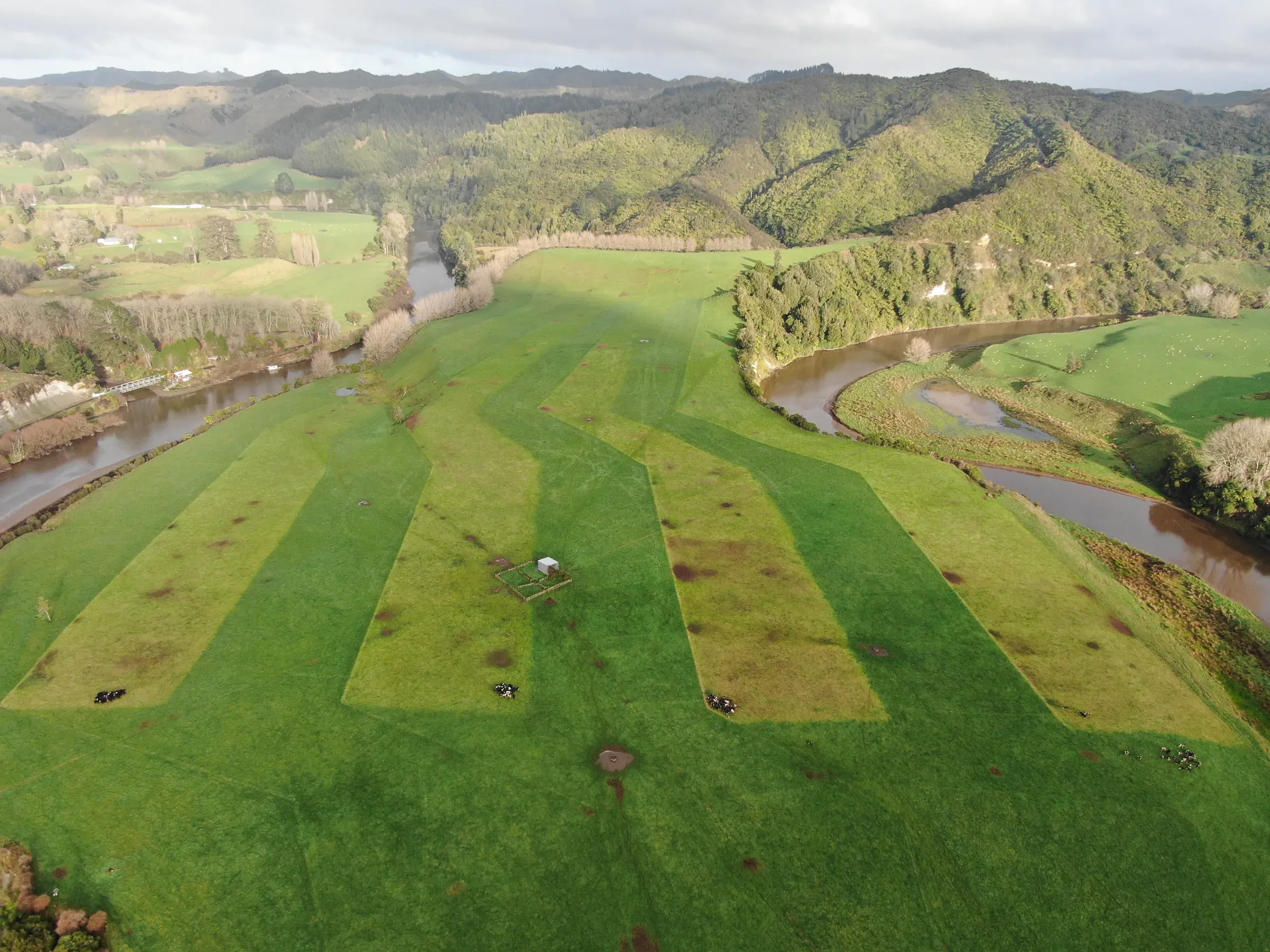
In the productive pastures of Taranaki, George Hardwick-Smith is quietly redefining what smart, efficient grazing looks like. With eShepherd virtual fencing, what was once a hard-to-manage river flat is now a streamlined, high-performing bull beef block.
George’s story isn’t about flashy tech. It’s about solving real problems on a real farm — like how to make the most of land without the cost and hassle of new fencing.
Transforming remote land into productive pasture
George had a choice: sink serious money into rebuilding fences across 30 hectares, or try something different.
“We thought we’d have a crack with virtual fencing… did a bit of cost analysis and decided it was worth it.”
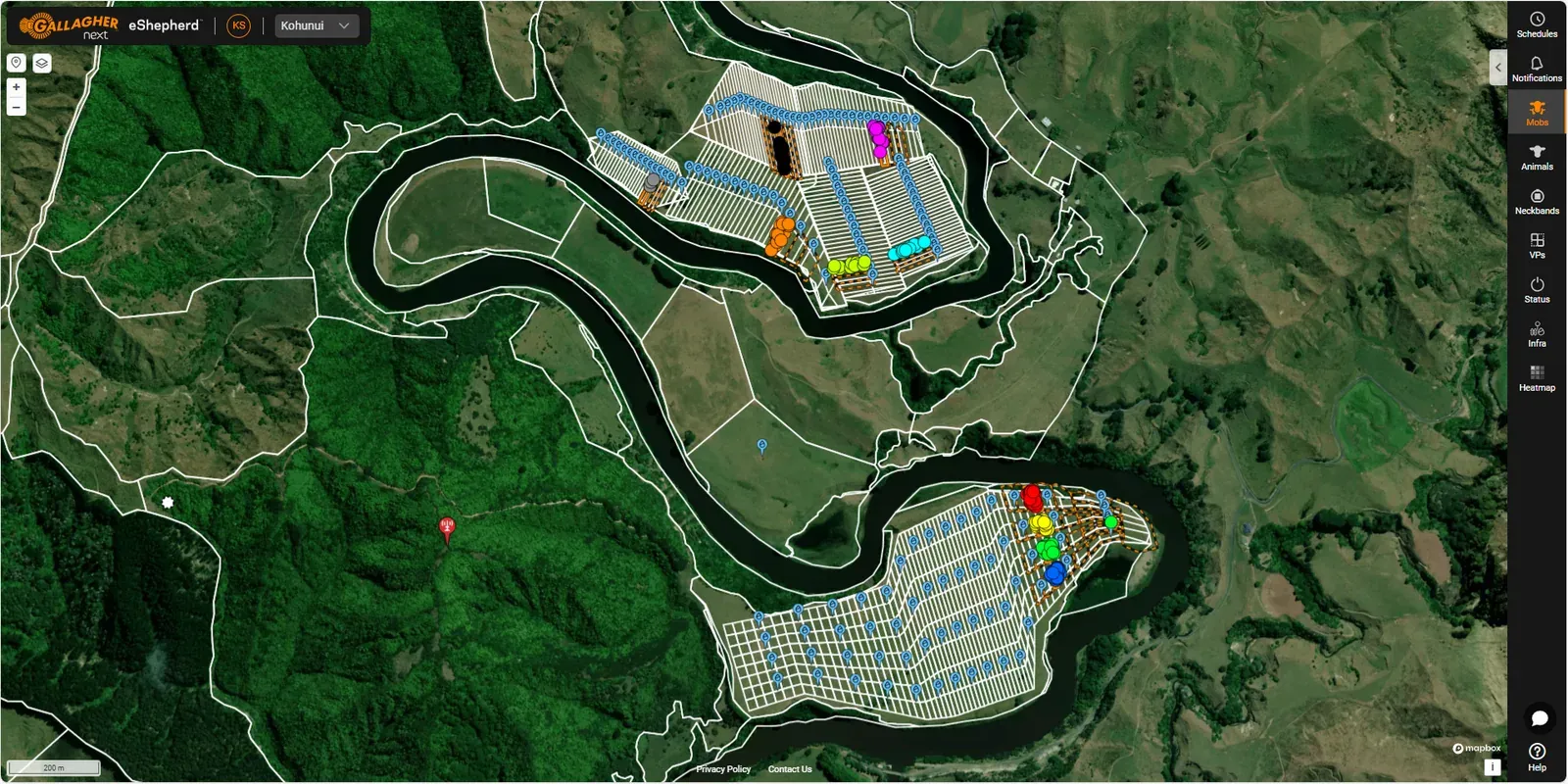
Using eShepherd neckbands, George implemented a precision cell grazing system on 200 R1 bulls. The structure: 10 mobs, 120 cells per mob. Highly targeted grazing, with shifts planned and scheduled weekly for each morning, drawn on a laptop and executed remotely — even when he’s on holiday.
“I can be in beautiful sunny Wanaka… just sit down and do it. It makes it really easy.”
Time saved, control gained
What used to require frequent manual shifts and travel now takes about 40 minutes a week.
“If you’re going down to each paddock and shifting 10 mobs once a day for a week… that’s going to take a lot longer than 40 minutes.”
Daily automated shifts mean consistent animal behaviour, better utilisation, and healthier pastures — especially during spring when compensatory growth kicks in.
Calm bulls, clean breaks
Despite less hands-on time, George’s bulls have stayed calm and settled.
“I was a little surprised. They’re still quite quiet, even with very little human interaction. I think having them in small mobs really helps.”
Within a few days the cattle adapt. Clean grazing lines and clear routines follow.
Profit, not just precision
George’s data-driven approach is paying off — returns well above industry averages. But he’s realistic about how to get there.
His tips for new users:
- Start small and build confidence
- Make sure your water setup is solid
- Spend time learning the platform before scaling up
For George, eShepherd isn’t about changing everything. It’s about making what he already does better.